Your heart races before an email even finishes loading. Your shoulders live somewhere up near your ears. You lie down at night, bone-tired, and your body simply refuses to power down.
If this sounds familiar, I want you to know something first: this isn’t a character flaw, and it isn’t something you need to white-knuckle your way through. Your nervous system is doing exactly what it was trained to do — staying alert, scanning for threat, bracing for the next thing. It learned this pattern for a reason, and it can unlearn it too.
This is where somatic yoga and your vagus nerve become allies instead of mysteries. Once you understand how to work with this nerve directly through movement and breath, you gain a physical off-switch for that constant hum of tension. In this piece, I’ll walk you through eight vagus nerve yoga exercises you can start using today, exactly how to do them, and why each one works.
Table of Contents
Understanding Vagus Nerve Yoga Exercises and Why They Matter
Your vagus nerve is the longest cranial nerve in your body, running from your brainstem down through your neck, chest, and abdomen. It’s the main communication line of your parasympathetic nervous system — the part responsible for rest, digestion, and recovery.
When that nerve has strong vagal tone, your body shifts out of fight-or-flight more easily and returns to baseline faster after stress. When vagal tone is low, you tend to stay wound up long after the stressful moment has passed.
Researchers at Harvard Medical School have found that slow, controlled breathing directly stimulates the vagus nerve and measurably increases heart rate variability, a key marker of nervous system resilience. That’s the science behind everything I’m about to teach you. Somatic yoga simply gives that science a body to move through.
How Somatic Movement Differs From Regular Yoga
Traditional yoga often chases a shape — the perfect pose, the deepest stretch. Somatic yoga asks a different question entirely: what does this movement feel like from the inside?
You’re not performing for a mirror or an instructor here. You’re listening to sensation, slowing down enough to notice tension before it becomes pain, and letting your nervous system, not your ego, set the pace.
Exercise One: Diaphragmatic Breathing to Wake the Vagus Nerve

This is the foundation everything else builds on, and I always start new students here. Lie on your back with knees bent, one hand on your chest and one on your belly.
Breathe in slowly through your nose, feeling your belly hand rise while your chest hand stays relatively still. Exhale even more slowly than you inhaled, letting your exhale run twice as long as your inhale.
That extended exhale is doing real work — it directly activates the vagus nerve and tells your body it’s safe to relax. Do you notice how much your shoulders soften after just five rounds of this?
Exercise Two: Humming Bee Breath for Nervous System Regulation
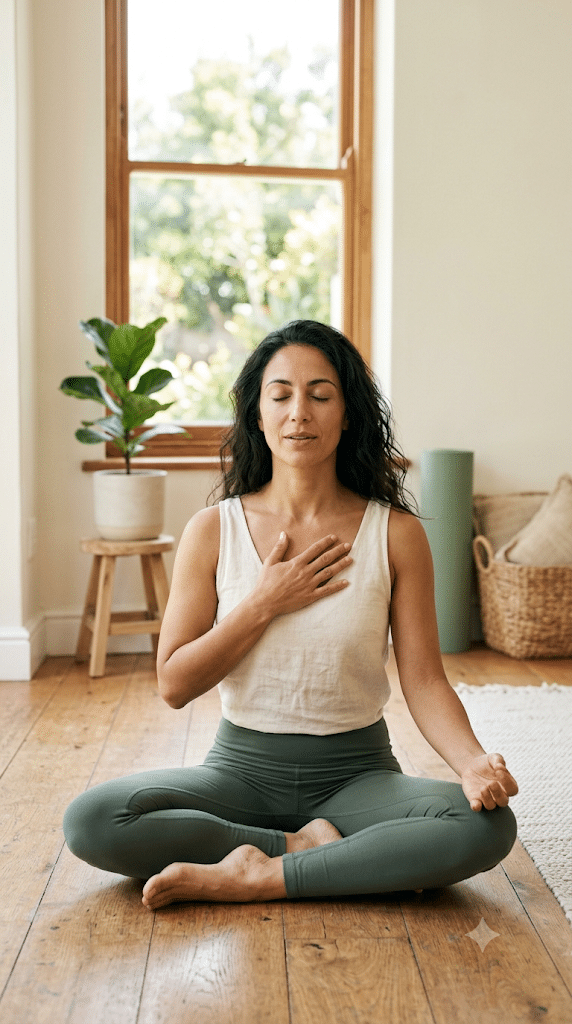
This one surprises people every time. Sit comfortably, close your eyes, and take a full breath in. As you exhale, hum steadily through a closed mouth, letting the vibration buzz through your lips and sinuses.
The vagus nerve travels close to your vocal cords and inner ear, which means humming, chanting, and gargling all stimulate it directly through vibration. Sound becomes medicine in this practice, not just a side effect of breathing.
Why Vibration Works So Well
Your body responds to physical vibration in ways that pure mental relaxation techniques simply can’t replicate. The buzzing sensation gives your nervous system something concrete to orient around, pulling you out of anxious thought loops and into present-moment sensation.
Exercise Three: Neck and Shoulder Rolls to Release Vagal Tension
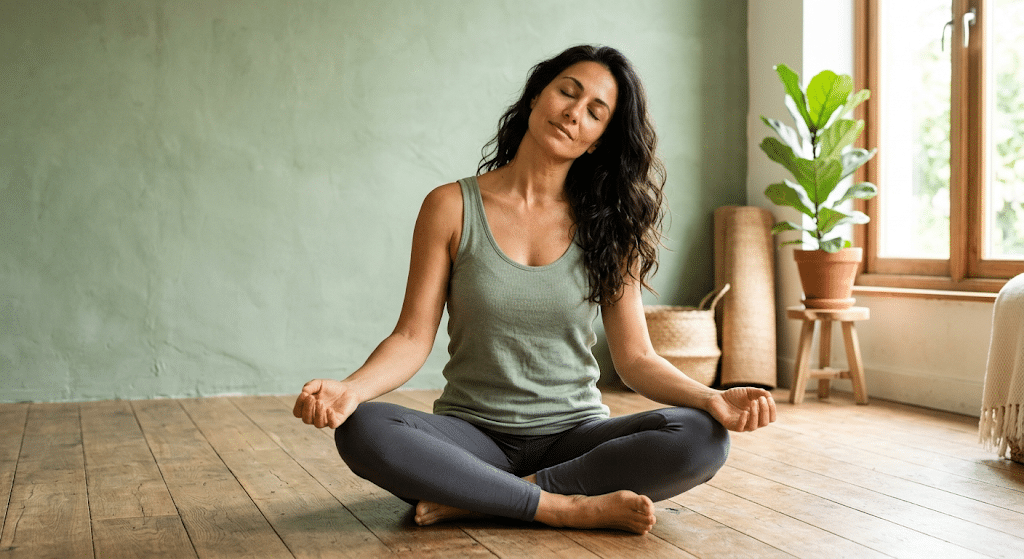
The vagus nerve runs directly through your neck, which is exactly why chronic neck tension keeps you stuck in a stressed state. Slowly drop your right ear toward your right shoulder, hold for three breaths, then roll your chin down and across to the left side.
Keep your shoulders relaxed away from your ears the entire time — this isn’t a deep stretch, it’s a gentle invitation. I remember teaching this to a student who’d been getting tension headaches for months, and she texted me two weeks later just to say her headaches had nearly disappeared.
Exercise Four: Legs-Up-The-Wall Pose for Deep Calm
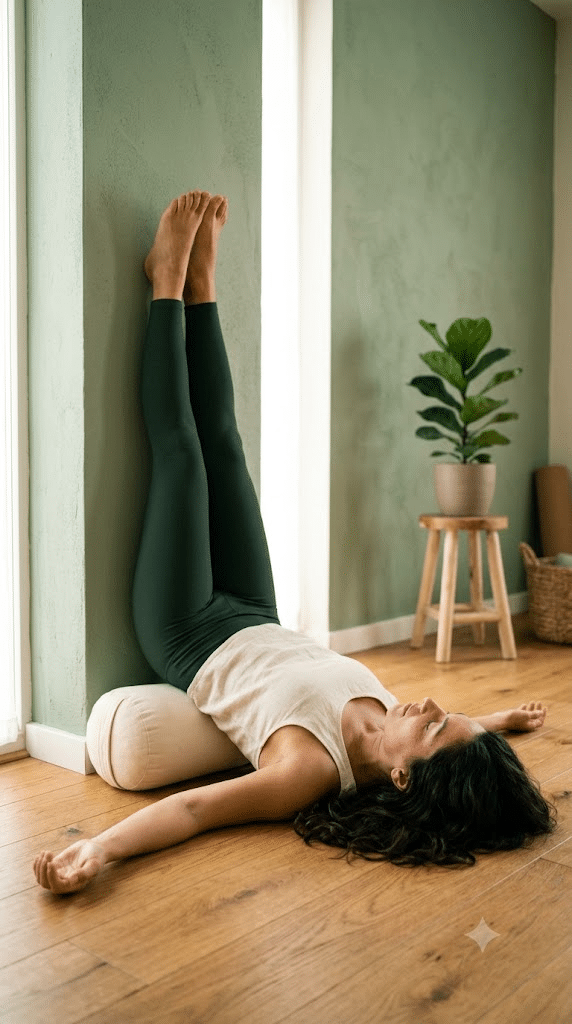
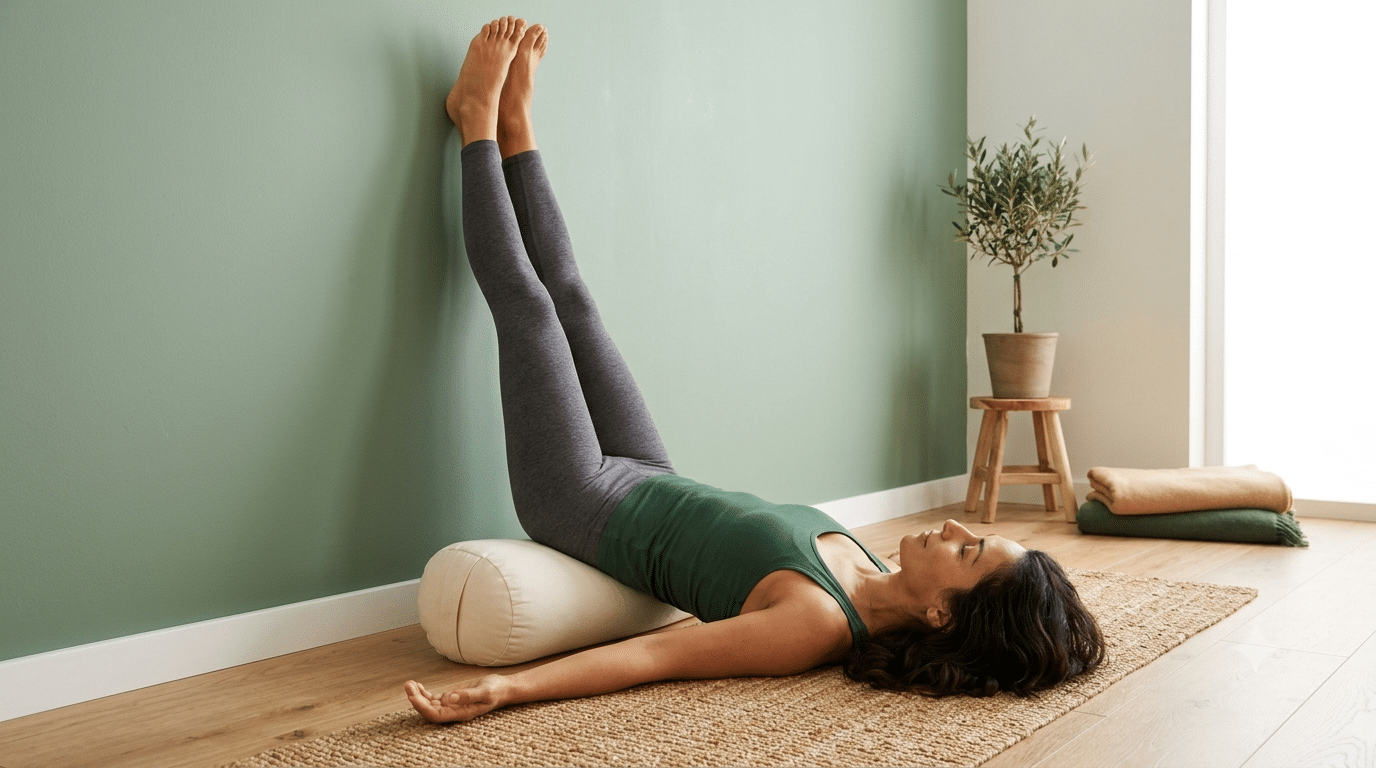
This restorative pose is one I return to almost daily myself. Sit sideways against a wall, then swing your legs up as you lower your back to the floor, letting your legs rest vertically against the wall.
Placing a yoga bolster beneath your hips lifts your pelvis just slightly and helps the pose feel effortless rather than effortful, especially if your hamstrings are tight.
Stay here for five to ten minutes with your eyes closed, breathing slowly. This gentle inversion shifts fluid away from your legs and signals your nervous system that there is nowhere urgent to be.
Exercise Five: Self-Massage Along the Vagal Pathway
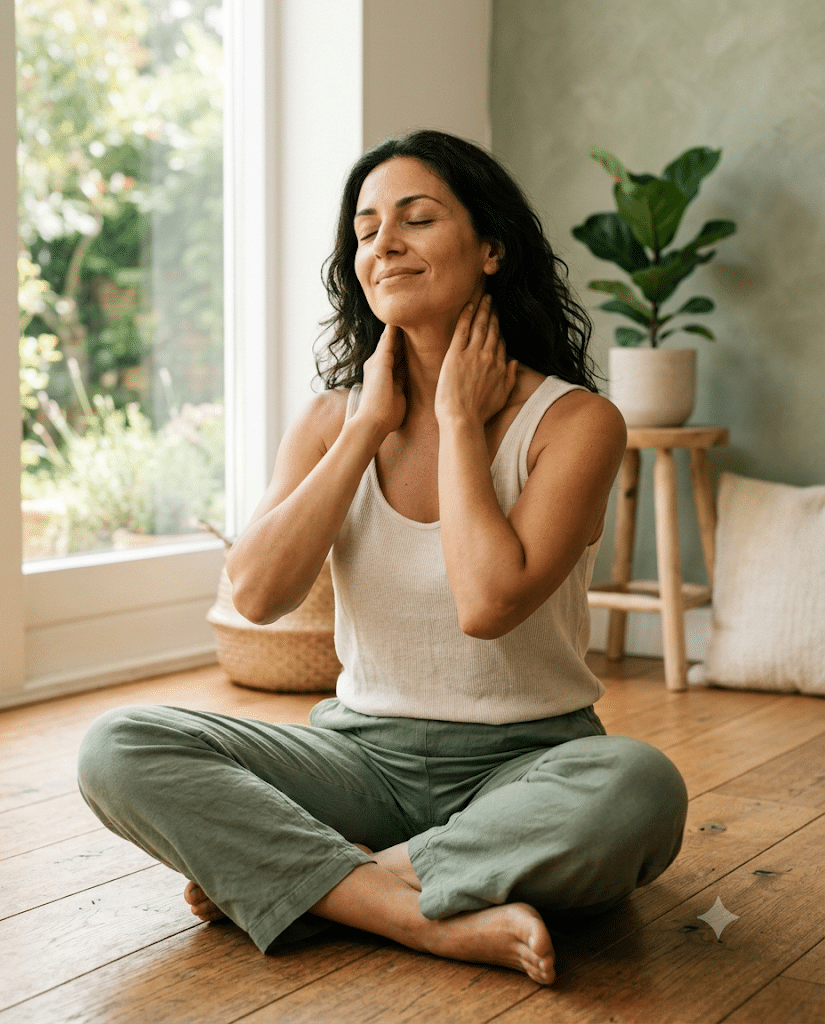
Your hands are more powerful tools than you might realize. Gently massage the sides of your neck along your carotid arteries, then move up behind your ears and down along your jawline, using slow circular pressure.
💚 Sofia’s Tip: Try this massage right before bed with the lights dimmed — the combination of touch and darkness signals safety to your nervous system on two levels at once.
This isn’t just a spa indulgence, though it certainly feels like one. Manual pressure along this pathway helps release the chronic bracing many of us carry without even realizing it.
Exercise Six: Supported Child’s Pose for Grounding
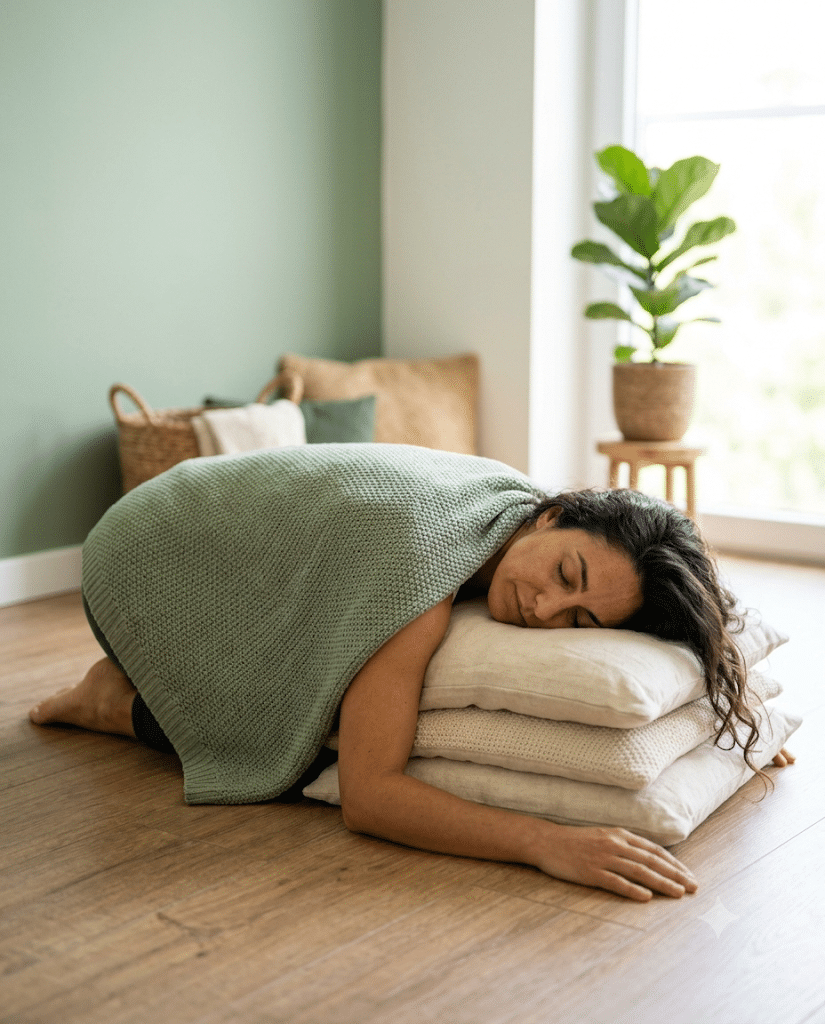
Kneel and fold forward, resting your torso over a bolster or stacked pillows, turning your head to one side. Let your arms rest wherever feels natural — reaching forward or resting alongside your body.
A soft yoga blanket draped over your back adds a comforting layer of weight that many of my students describe as feeling almost like being held.
Stay here for at least two minutes, breathing into your back body. Isn’t it strange how something this simple can feel so profoundly restful?
The Role of Gentle Pressure and Weight
Deep pressure touch, whether from a blanket, a bolster, or your own hands, activates parasympathetic pathways in a way that’s well documented in occupational therapy research. Your body reads weight and pressure as safety cues, which is exactly why weighted blankets have become so popular for anxiety.
Exercise Seven: Yoga Nidra Body Scan for Complete Release
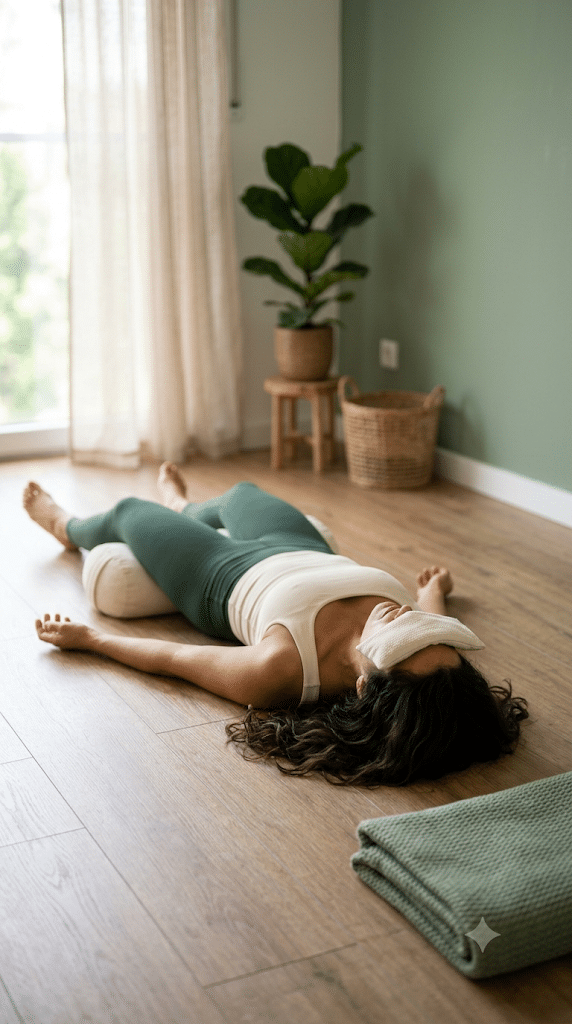
Lie flat on your back in a completely supported position, using pillows under your knees if that helps your lower back settle. Close your eyes and slowly bring your attention through each part of your body, starting at your toes and working upward.
Placing an eye pillow gently over your closed eyes adds just enough weight to deepen the sense of letting go, and it blocks out light that might otherwise keep your mind alert.
This practice, often called yoga nidra, has been shown in sleep research to lower cortisol levels and improve subjective feelings of rest even in a single session.
Exercise Eight: Cold Water Face Splash for Instant Reset

When you need something fast, this is my go-to. Splash cool water on your face, focusing on the areas around your eyes and temples, or hold a cold washcloth there for thirty seconds.
This triggers what’s known as the mammalian dive reflex, which rapidly slows your heart rate through direct vagus nerve activation. It’s not elegant, but it works within seconds, which matters enormously on your hardest days.
A Simple Daily Practice to Build Vagal Tone
Consistency matters far more than intensity when you’re rebuilding nervous system resilience. Here’s a five-step sequence you can return to every single day.
- Begin with two minutes of diaphragmatic breathing, lying down or seated comfortably.
- Move into humming bee breath for one minute, letting the vibration settle your whole face.
- Roll your neck slowly in both directions, three rolls each side.
- Rest in legs-up-the-wall pose for five to ten minutes, using a bolster if you have one.
- Close with a two-minute self-massage along your neck and jaw before opening your eyes.
Ten to fifteen minutes total, done first thing in the morning or right before bed, is enough to start shifting your baseline over a few weeks.
Deepening Your Practice With Somatic Understanding
If this way of working with your body resonates with you, learning more about the theory behind it can deepen every session. Understanding how your nervous system moves between states of safety and threat gives you language for what you’re already feeling in your body.
I recommend a well-written book on somatic yoga and polyvagal theory to nearly every student who wants to go beyond the exercises themselves.
Knowledge like this doesn’t replace practice, but it does make the practice make sense, which for many of us is exactly what keeps us coming back to the mat.
Key Takeaways
→ Your vagus nerve directly controls how quickly you recover from stress
→ Extended exhales and humming both stimulate the vagus nerve through different pathways
→ Weight and gentle pressure from bolsters, blankets, or self-massage signal safety to your body
→ A short daily practice matters more than occasional long sessions
→ Cold water on your face can interrupt acute anxiety within seconds
Let This Become Your New Baseline
Activating your vagus nerve isn’t about forcing your body into stillness — it’s about giving your nervous system consistent evidence that it’s safe to soften. You don’t need to do all eight exercises perfectly or even every day; you just need to keep returning, gently and without judgment.
Start with even one of these practices tonight, whether that’s a few slow breaths or five minutes with your legs up the wall. Your body remembers safety just as easily as it remembers stress, and every small practice is a step back toward that calm. I’d love to hear which exercise you try first — come share it in the comments, or explore more somatic practices over at SomaticYogaFlow.com.
Frequently Asked Questions
What is the fastest way to activate the vagus nerve?
Cold exposure tends to work fastest, particularly splashing cold water on your face or holding a cold cloth against your eyes and temples for thirty seconds. This triggers the mammalian dive reflex, which slows your heart rate almost immediately. For a slower but more sustainable reset, extended exhale breathing works within just a few minutes and can be done anywhere.
Can yoga really help with vagus nerve function?
Yes, and this is well supported by research on breathing and heart rate variability. Poses that emphasize slow breathing, gentle inversion like legs-up-the-wall, and prolonged stillness all encourage parasympathetic activation. The key is slowness and sustained attention rather than intensity or flexibility.
How long does it take to improve vagal tone?
Most people notice subtle shifts in how quickly they calm down within two to three weeks of consistent daily practice. Meaningful, lasting changes in baseline nervous system regulation tend to build over two to three months. Patience matters here, since this is retraining a pattern your body has held for a long time.
What are signs of low vagal tone?
Common signs include difficulty calming down after stress, digestive issues, a resting heart rate that stays elevated, and feeling easily overwhelmed by minor irritations. Poor sleep and a sense of being chronically “on edge” often show up alongside these physical symptoms. If several of these sound familiar, vagus nerve exercises are an excellent place to start.
Is humming actually effective for anxiety?
It genuinely is, and the mechanism is quite direct. The vagus nerve passes close to your vocal cords, so the vibration created by humming or chanting stimulates it in real time. Many people feel a noticeable shift in tension in their jaw, throat, and chest within just a minute or two of humming steadily.