
Your heart is racing before you’ve even opened your laptop. Your jaw is tight, your shoulders are up near your ears, and you cannot remember the last time your body felt like a safe place to be.
This is what it feels like to live in fight or flight mode. Your nervous system doesn’t know the difference between a work deadline and a genuine threat, so it keeps sounding the alarm, over and over, until exhaustion becomes your baseline.
Fight or flight yoga is different from a typical workout because it speaks directly to your nervous system instead of just your muscles. In this article, you’ll learn what’s actually happening in your body during fight or flight, why traditional stress advice often falls short, and a full practice you can use today to help your body remember what safety feels like.
Table of Contents
What Fight or Flight Yoga Addresses in Your Body
Fight or flight is not a mindset. It’s a full-body physiological state, triggered by your sympathetic nervous system the moment your brain perceives danger, real or imagined.
Your blood moves away from digestion and toward your limbs. Your breath becomes shallow and quick. Your muscles brace for action that, in most modern situations, never actually comes.
I remember teaching a client named Renee who described feeling “wired but exhausted” every single evening, unable to figure out why rest never seemed to land in her body. Once we started working with fight or flight yoga instead of just talking about stress, everything shifted for her within a few weeks.
This is exactly the gap that fight or flight yoga is built to close.
Why Fight or Flight Yoga Works When Willpower Doesn’t
Have you ever tried to simply think your way out of anxiety, only to feel more frustrated than before? Willpower operates in the thinking brain, but fight or flight lives in the body, so it needs a body-based solution.
Somatic yoga uses slow movement, breath, and interoceptive awareness to send safety signals directly to your nervous system, bypassing the analytical mind almost entirely. This is the core mechanism that makes fight or flight yoga so effective for people who feel stuck no matter how much they journal or strategize.
Instead of forcing calm, you’re teaching your body a new pattern through repetition and gentle sensation. That shift from mental effort to physical experience is where real change begins.
The Science Behind Fight or Flight Yoga and Your Vagus Nerve
Fight or flight yoga works because of a very real, well-documented structure in your body called the vagus nerve, which runs from your brainstem down through your heart, lungs, and digestive organs. This nerve is the main highway of your parasympathetic nervous system, the branch responsible for rest, digestion, and recovery.
Research published in Frontiers in Psychiatry found that slow, controlled breathing practices measurably increased vagal tone and reduced self-reported anxiety symptoms in participants over an eight-week period. This matters because vagal tone is directly linked to how quickly your body can shift out of fight or flight and back into a state of calm.
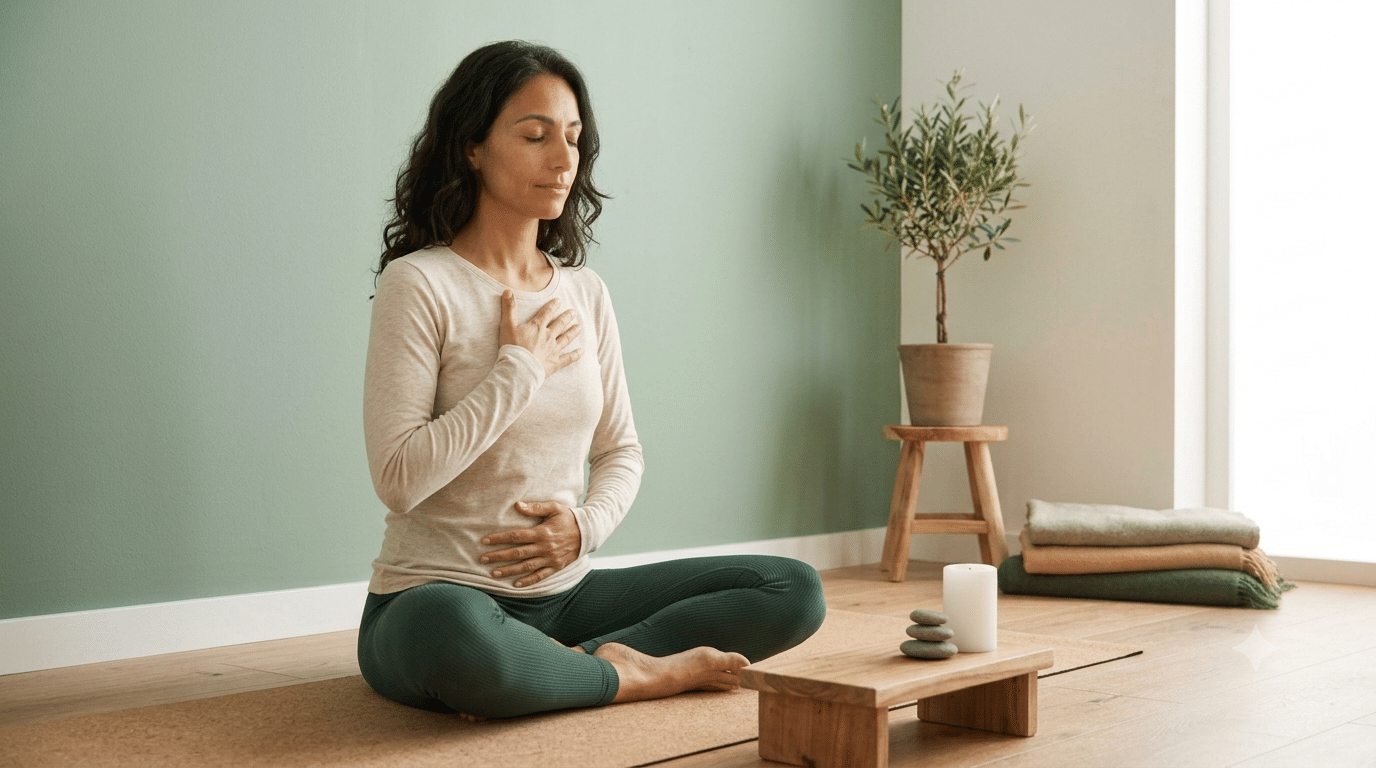
💚 Sofia’s Tip: Try placing one hand on your chest and one on your belly during any breathing practice — feeling the movement helps your brain register that you are safely, physically here.
Slow exhales, gentle twists, and long holds in restorative postures all stimulate this vagal pathway in ways that fast-paced exercise simply cannot replicate.
A Simple Fight or Flight Yoga Practice You Can Do Right Now
You don’t need an hour or a studio to begin using fight or flight yoga today. This practice takes about twelve minutes and can be done on your bedroom floor.
- Sit or lie down somewhere quiet, and place one hand on your chest and one on your belly to establish contact with your own body.
- Inhale slowly through your nose for a count of four, letting your belly rise gently under your hand.
- Exhale through your mouth for a count of six, making your exhale noticeably longer than your inhale.
- Repeat this breath pattern for two full minutes before moving into gentle seated cat-cow, following your breath rather than forcing the shape.
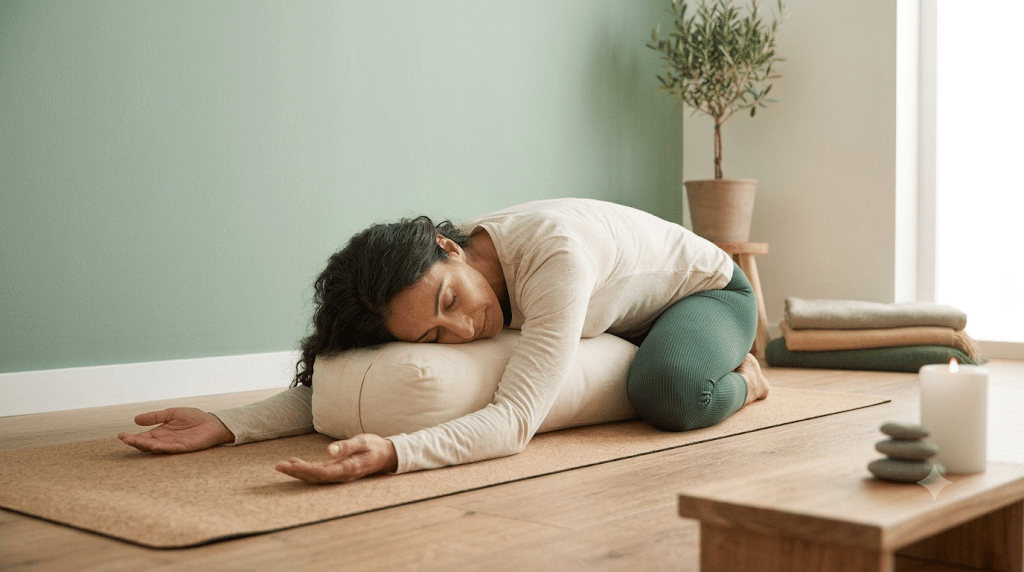
- Move slowly into a supported child’s pose, letting your forehead rest on the floor or a cushion for at least ten full breaths.
- Transition into a gentle seated twist on each side, exhaling as you rotate and inhaling as you return to center.
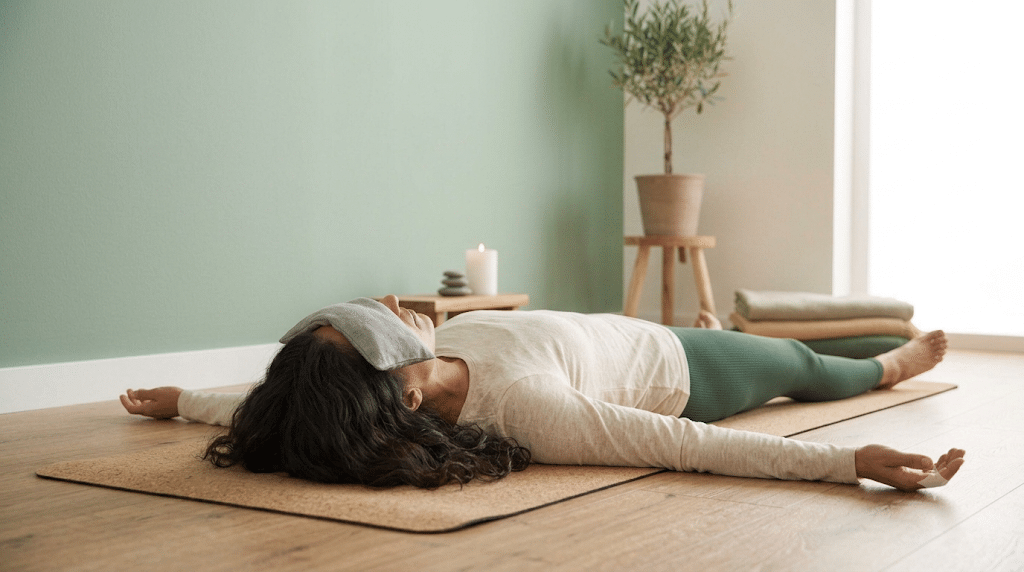
- Finish lying flat on your back for three to five minutes, allowing your nervous system to fully register the shift you just created.
I always begin this exact sequence on a cork yoga mat myself — the natural texture gives me an instant sense of grounding that synthetic mats simply cannot replicate.
Common Triggers That Keep You Stuck Beyond Fight or Flight Yoga
Fight or flight yoga is powerful, but it works best when you also understand what’s keeping your nervous system activated in the first place. Chronic notification checking, caffeine on an empty stomach, and unresolved conflict all quietly feed the sympathetic nervous system throughout the day.
Sofia here — I used to drink two cups of coffee before even looking at my inbox, and I genuinely didn’t connect it to my racing heart until I removed it for two weeks and felt the difference myself. Small daily inputs accumulate into a body that never fully exhales.
Placing a yoga bolster beneath your knees during any restorative pose completely changes the experience, letting your lower back release in a way that feels almost effortless.
This transition matters because your nervous system doesn’t reset on its own between triggers unless you actively give it a chance to.
How to Know Fight or Flight Yoga Is Actually Working
You won’t feel dramatically different after one single session, and that’s completely normal. What you’re looking for instead are small, quiet signs: a slower resting heart rate, an easier time falling asleep, or noticing your shoulders have dropped without trying.
Is it strange that the absence of anxiety can feel almost unfamiliar at first? Many of my students describe this exact sensation, mistaking calm for boredom simply because it’s been so long since their body felt this way.
Journaling one sentence after each practice — noting only how your body feels, not your thoughts — can help you track this shift over several weeks without overanalyzing it.
Making Fight or Flight Yoga Part of Your Daily Rhythm
Consistency matters more than intensity when it comes to nervous system healing. Five minutes daily will change your baseline far more than one long session done occasionally.
Try anchoring your fight or flight yoga practice to something you already do, like right after brushing your teeth or right before checking your phone in the morning. This kind of habit stacking removes the mental effort of remembering, which matters enormously on the days your nervous system is already overtaxed.
If you have never tried an eye pillow during your closing rest, I genuinely encourage you to — the gentle weight signals your nervous system that it is safe to fully let go.
When to Seek Extra Support Beyond Fight or Flight Yoga
Fight or flight yoga is a genuinely powerful tool, but it isn’t meant to replace professional support if your nervous system dysregulation is tied to trauma, panic disorder, or an underlying medical condition. A trauma-informed therapist or your physician can work alongside this practice, not instead of it.
If you notice your anxiety intensifying rather than settling during any of these poses, stop and return to simple seated breathing, or reach out to a professional for guidance. Your body’s signals are information, not something to push through.
Key Takeaways
→ Fight or flight is a physical state, not a mindset you can simply think your way out of
→ Long exhales stimulate your vagus nerve, shifting your body toward calm
→ Twelve minutes of daily practice matters more than one long occasional session
→ Small signs of progress include slower heart rate and easier sleep
→ Professional support can work alongside this practice when trauma is involved
Conclusion
Fight or flight yoga gives your nervous system a physical pathway back to safety, something willpower alone was never able to offer you. You don’t need to do this perfectly, and you don’t need every session to feel profound — you simply need to show up gently and consistently.
Start with just the twelve-minute practice above today, even if it’s the only thing you do for yourself. I would genuinely love to hear how it feels for you, so come share your experience in the comments or explore more practices together at SomaticYogaFlow.com.
Frequently Asked Questions
What is fight or flight yoga?
Fight or flight yoga refers to somatic yoga practices specifically designed to calm an overactive sympathetic nervous system. It combines slow movement, extended exhales, and grounding postures to signal safety to your body rather than focusing on strength or flexibility. Unlike typical yoga classes, the pacing is intentionally slow, and the goal is nervous system regulation rather than a physical workout.
How long does it take to exit fight or flight mode?
Some people notice a shift within a single twelve-minute session, especially in heart rate and muscle tension. Lasting change in your baseline nervous system state typically takes several weeks of consistent daily practice. Patience matters here, since your body is unlearning a pattern it may have held for years.
Can breathing alone stop a fight or flight response?
Slow, extended exhale breathing is one of the fastest ways to activate your vagus nerve and shift out of fight or flight. It won’t resolve deeper chronic stress on its own, but in the moment, it’s remarkably effective for interrupting an acute stress spike. Pairing it with gentle movement extends and deepens that effect.
Is fight or flight yoga different from regular yoga?
Yes, the intention and pacing are different even when some poses look similar. Regular yoga often emphasizes strength, flexibility, or flow, while fight or flight yoga prioritizes nervous system safety above all else, using longer holds and slower transitions. The focus is always on sensation and breath rather than achieving a perfect shape.
Can fight or flight yoga help with panic attacks?
Many people find these practices helpful for managing everyday stress and mild anxiety, and some use gentle breathing techniques during early panic symptoms. However, if you experience frequent or severe panic attacks, it’s important to work with a therapist or doctor alongside any yoga practice. This approach works best as one part of a broader support system rather than a standalone treatment.