Your shoulders live somewhere up near your ears now. You notice it in traffic, in the grocery line, in the three seconds before your phone buzzes with another notification.
That tightness isn’t a character flaw and it isn’t something you can simply decide away. Your body has been running on sympathetic overdrive for so long that “calm” has started to feel like a foreign language.
This is exactly where parasympathetic nervous system yoga comes in. It works with your physiology instead of against it, using breath and gentle movement to signal safety to a nervous system that has forgotten what safety feels like. By the end of this article you will understand how this branch of your nervous system works, and you will have a full twelve-pose sequence you can use tonight.
Table of Contents
What Is the Parasympathetic Nervous System, Really
Your autonomic nervous system runs on two main branches, and most of us only ever hear about one of them. The sympathetic branch is your gas pedal — it gets you moving, alert, and ready to react. The parasympathetic branch is your brake, and it’s the one responsible for digestion, deep sleep, and that heavy, melting feeling after a good stretch.
Vagal tone is the term researchers use to describe how efficiently your parasympathetic system can bring you back to baseline after stress. Higher vagal tone means your body recovers faster from a stressful email or a hard conversation. Lower vagal tone means you stay wired long after the actual threat has passed, which is where chronic anxiety often takes root.
Somatic yoga strengthens this exact mechanism. Isn’t it strange that something as simple as slowing your exhale can talk directly to a system most of us never think about?
How Parasympathetic Yoga Differs From a Regular Yoga Class
A typical vinyasa class is often, ironically, a sympathetic activity. It builds heat, raises heart rate, and asks your body to work — which is wonderful for strength, but it isn’t what a frayed nervous system needs on a Tuesday night after a brutal week.
Parasympathetic-focused practice moves slower and holds poses longer, usually somewhere between one and five minutes. There’s less emphasis on alignment perfection and far more emphasis on interoception — your ability to actually feel what’s happening inside your body as you move.
I still remember teaching a private client, a hospice nurse in her forties, who told me she’d spent years doing “hard” yoga and never once felt calm afterward. Three weeks into a slower, parasympathetic-focused practice, she said her hands finally stopped shaking during her drive home from work. That’s the difference this kind of practice can make.
The Science Behind Nervous System Regulation Through Yoga
This isn’t just a feeling, and it isn’t just Sofia’s opinion. Researcher Chris Streeter and colleagues at Boston University found that a consistent yoga practice was associated with increased GABA levels in the brain, a neurotransmitter closely tied to reduced anxiety and improved mood regulation.
Slow, extended exhalation in particular stimulates the vagus nerve, which runs from your brainstem down through your throat, heart, and diaphragm. When you lengthen your exhale beyond your inhale, you are physically activating the same nerve that tells your organs it’s safe to rest and digest.
This is why breath comes before pose in everything I teach. The posture matters, but the breath is doing the real conversation with your nervous system.
Signs Your Nervous System Needs This Practice
Chronic tension in your jaw or shoulders is often the first sign, even before you notice anything emotional. Trouble falling asleep despite being exhausted, a racing mind the second your head hits the pillow, and waking up already tired are all classic markers of a nervous system stuck in a low simmer of alert.
Digestive issues that seem to have no clear medical cause frequently trace back here too, since your gut and your vagus nerve are in constant communication. So is that feeling of being tired but wired, where your body is depleted yet your mind won’t stop spinning.
💚 Sofia’s Tip: If you only have two minutes today, place one hand on your chest and one on your belly, and simply make your exhale longer than your inhale. That alone begins shifting you toward parasympathetic dominance.
The 12-Step Parasympathetic Yoga Sequence
This sequence is designed to move slowly, layer by layer, so your body has time to actually register the shift rather than just going through the motions. Give yourself thirty-five to forty-five minutes, and resist the urge to rush toward the end.
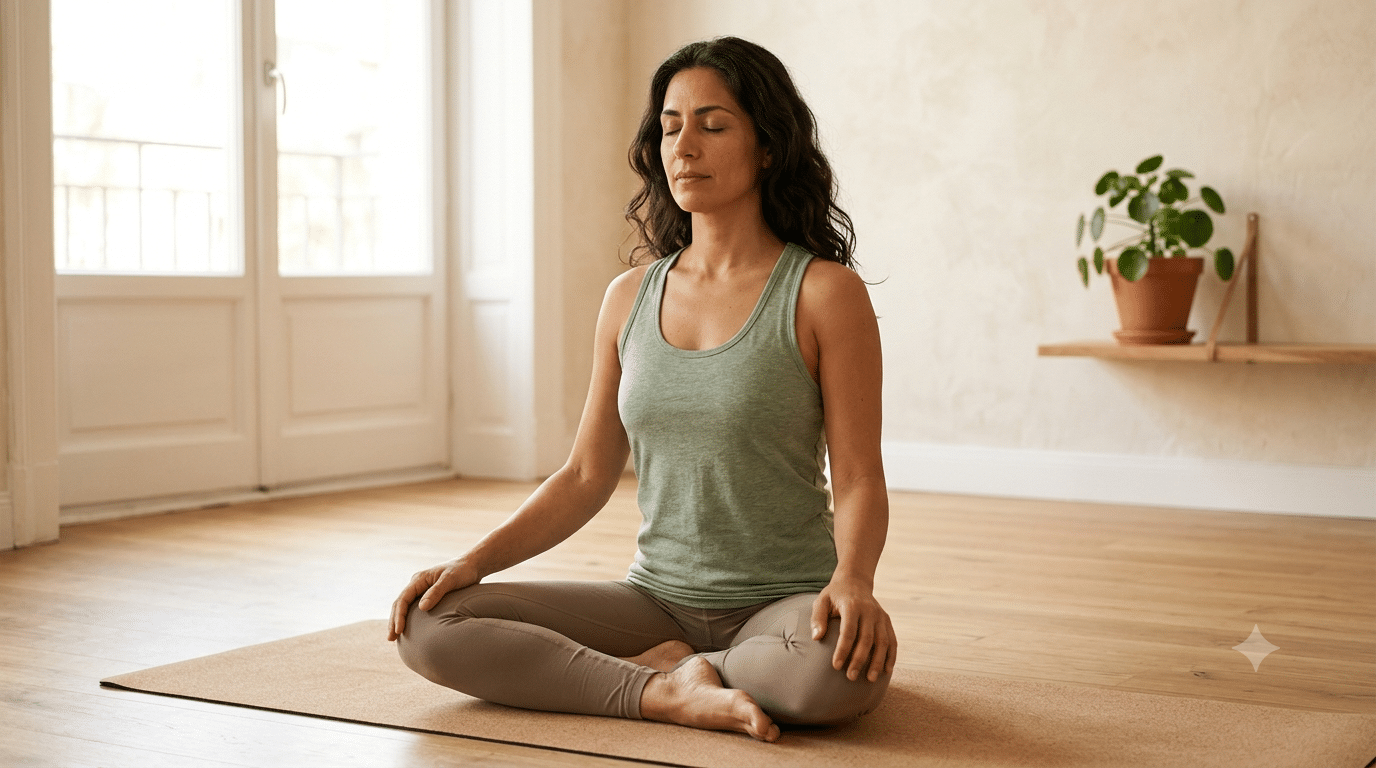
Seated breath awareness — Sit comfortably and breathe naturally for one full minute, simply noticing the length of your inhale versus your exhale without changing anything yet.
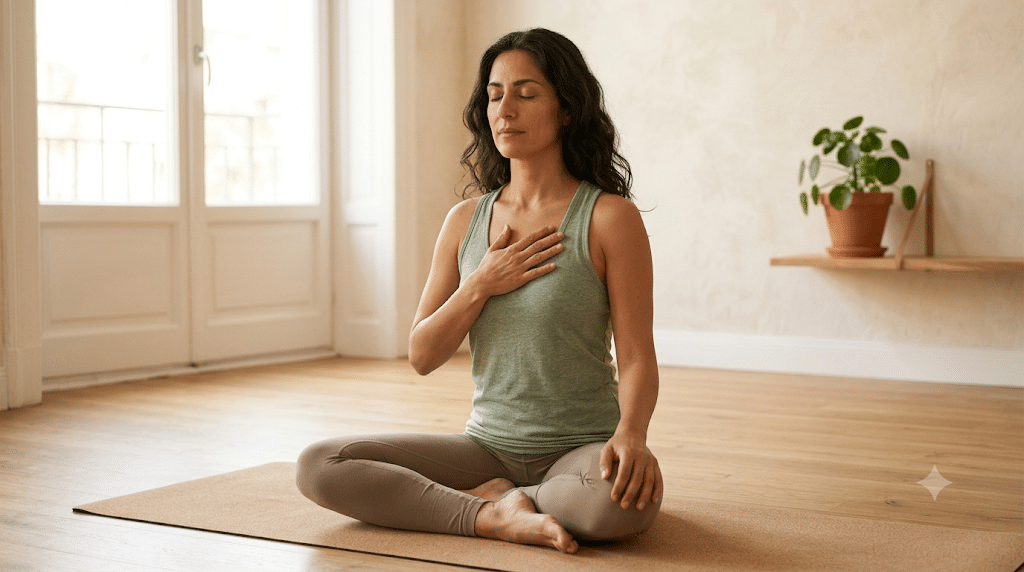
Extended exhale breathing — Inhale for a count of four, then exhale for a count of six or eight, and repeat for two full minutes to begin engaging the vagus nerve.
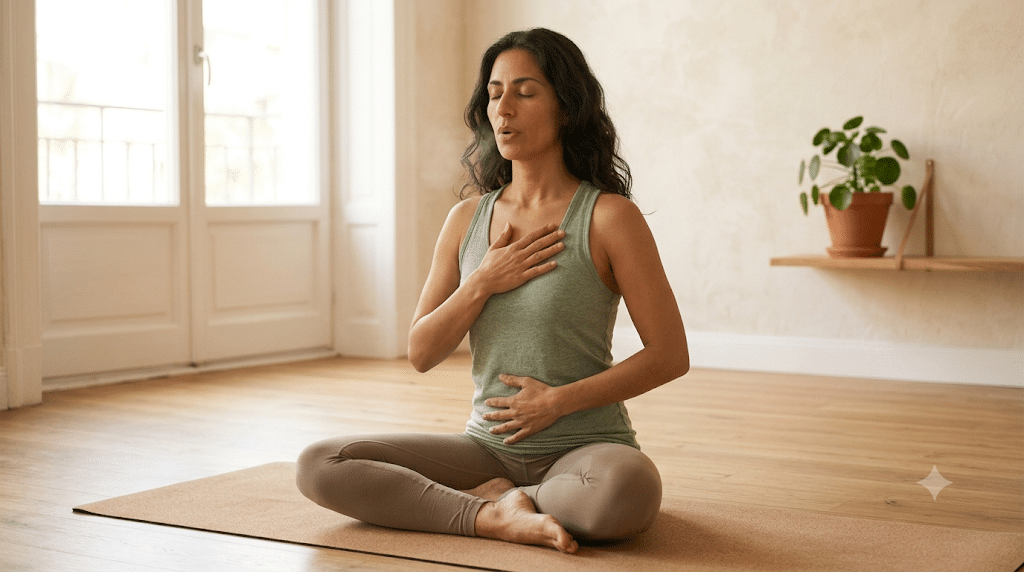
Seated cat-cow — Move slowly between rounding and arching your spine for one minute, syncing each movement with a full breath cycle.
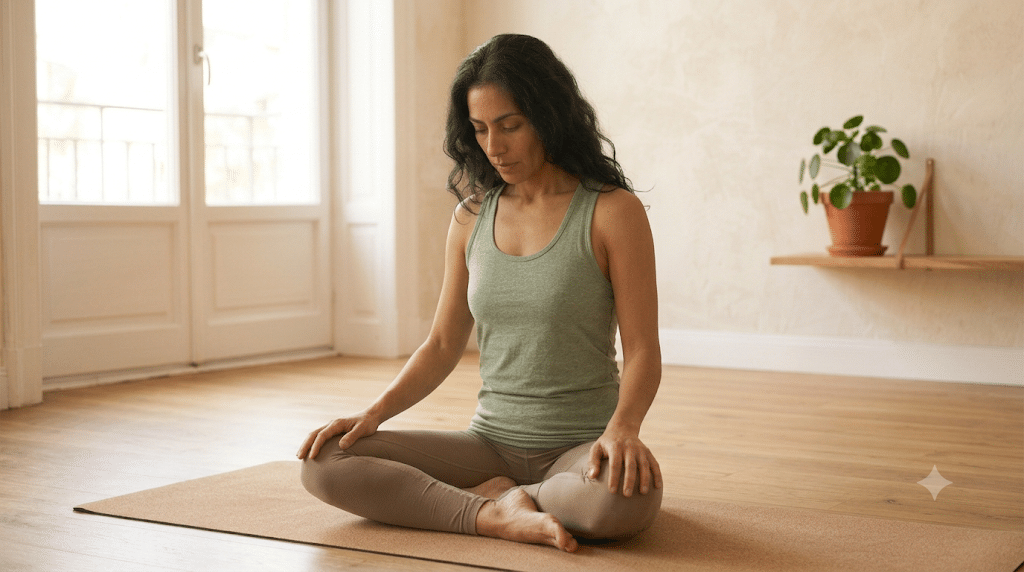
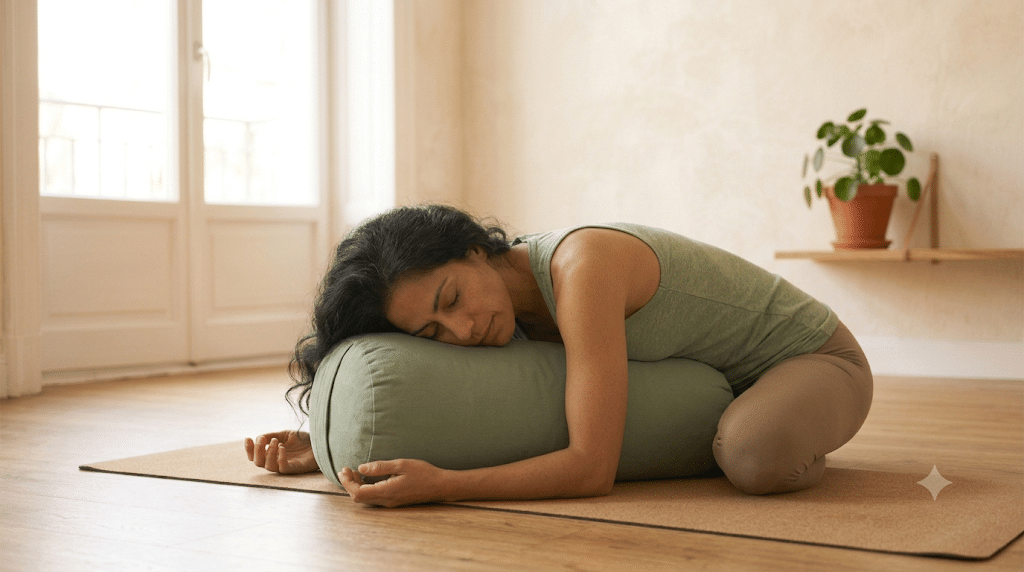
Supported child’s pose — Rest your torso over a bolster or folded blanket for three to five minutes, letting your spine round gently and your breath slow further.
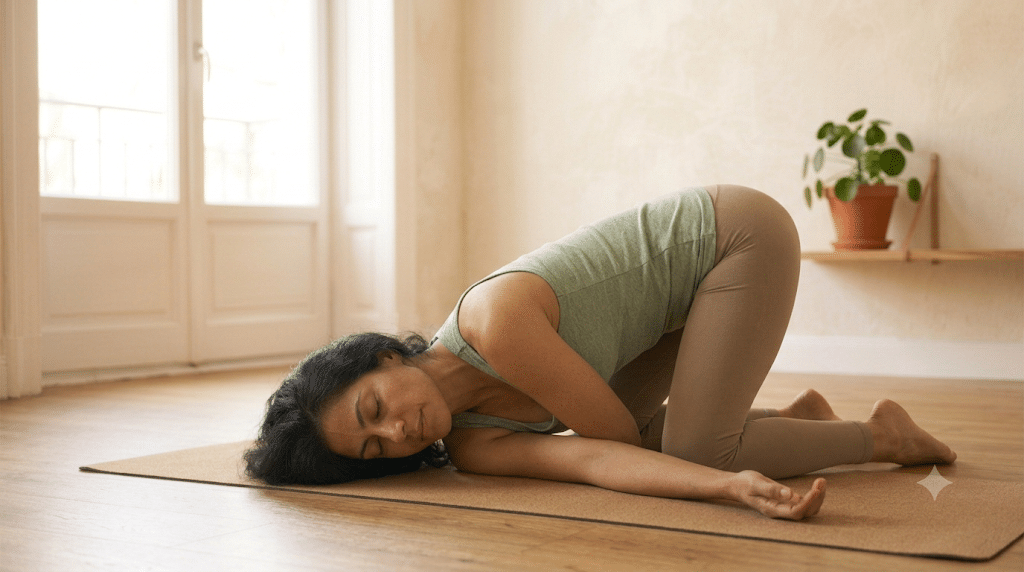
Thread the needle — Slide one arm beneath your body in a gentle spinal twist, holding ninety seconds per side to release tension along the shoulders.
Reclined bound angle pose — Lie back with the soles of your feet together and knees falling open, supported by pillows if needed, holding for three to five minutes.
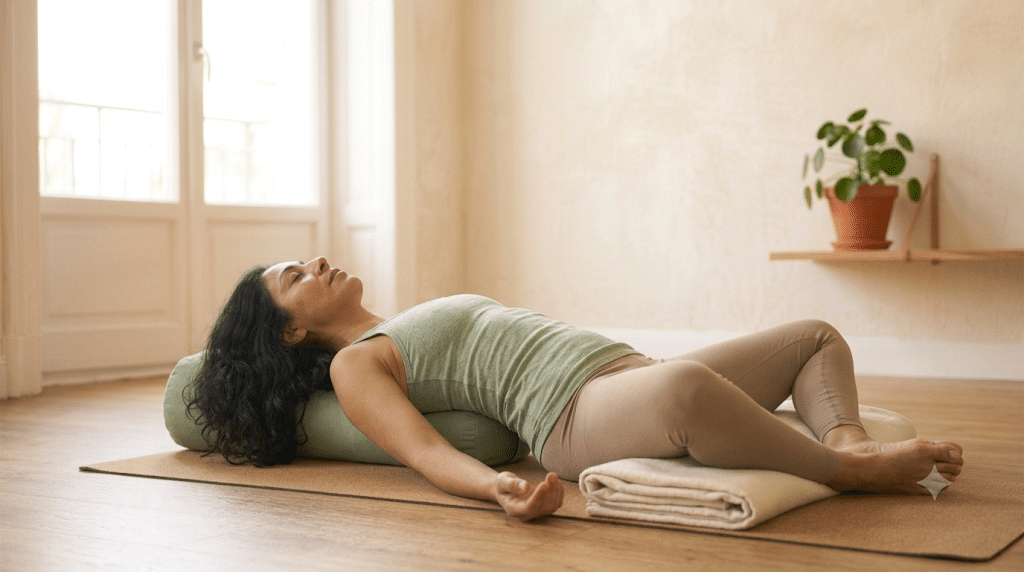
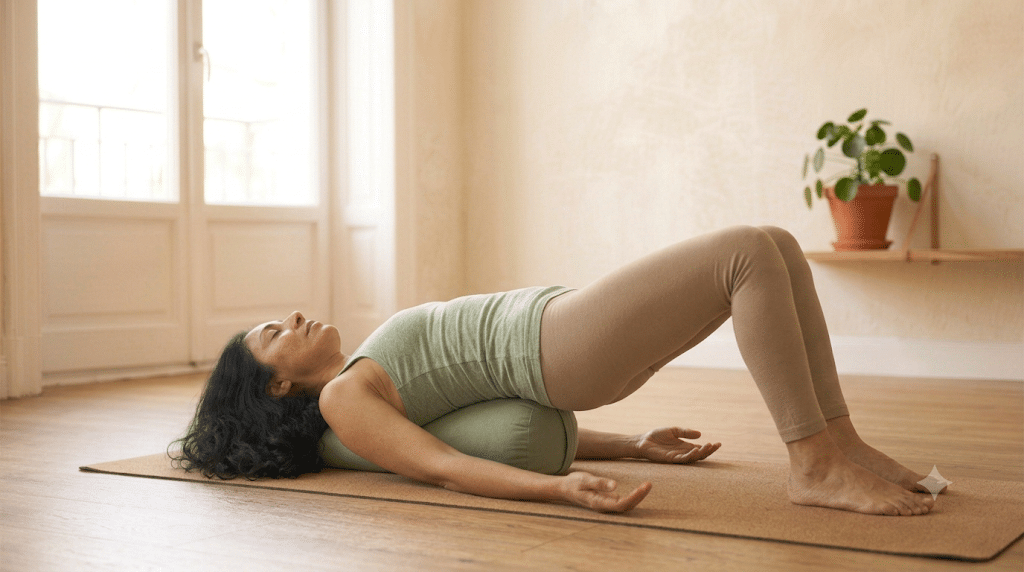
Supported bridge pose — Rest your lower back on a bolster or blocks for two to three minutes, opening the chest without any active effort.
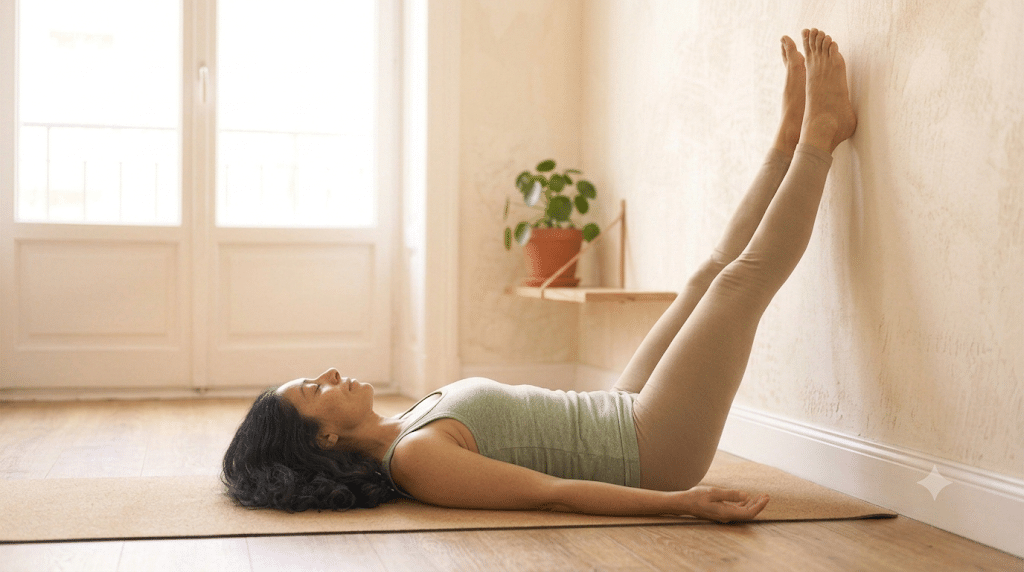
Legs up the wall — Elevate your legs against a wall or chair seat for five to ten minutes, which encourages venous return and a natural drop in heart rate.
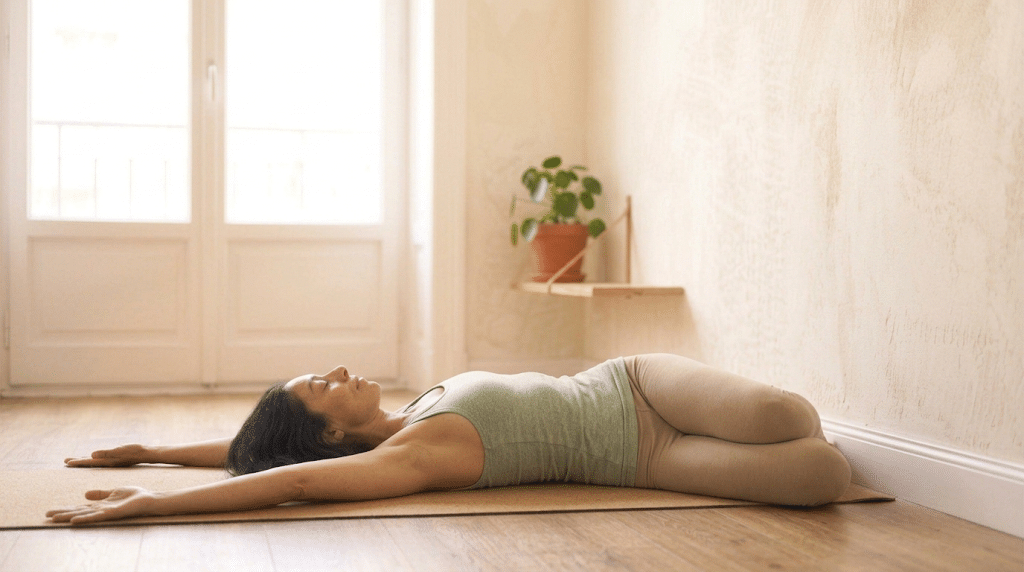
Gentle supine twist — Slowly rotate your knees to one side for ninety seconds, then the other, releasing tension along the spine.
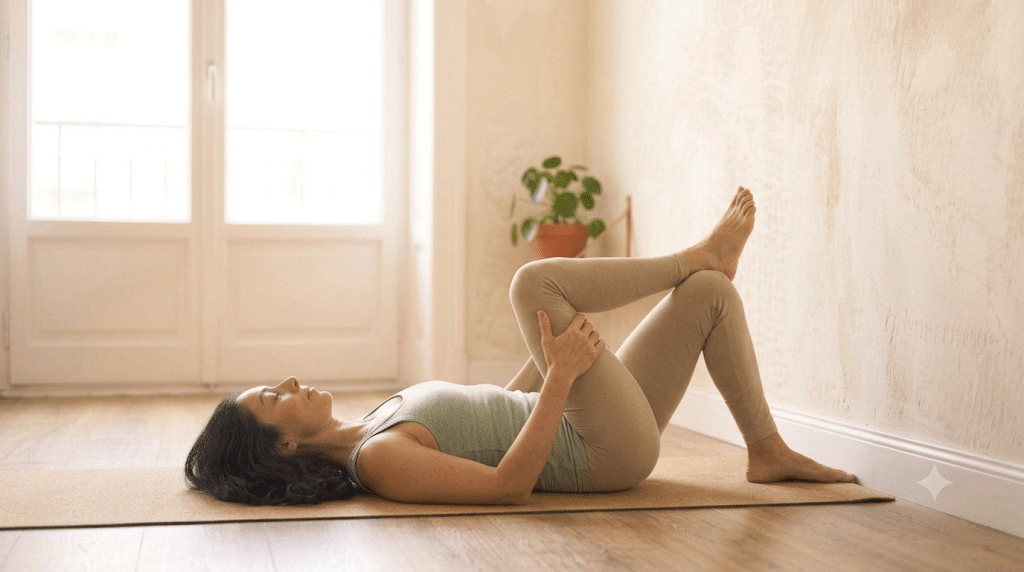
Reclined figure-four stretch — Cross one ankle over the opposite knee and hold for ninety seconds per side to release the hips.
Body scan — Lying still, slowly bring attention through each part of your body for three minutes, softening wherever you notice tension.
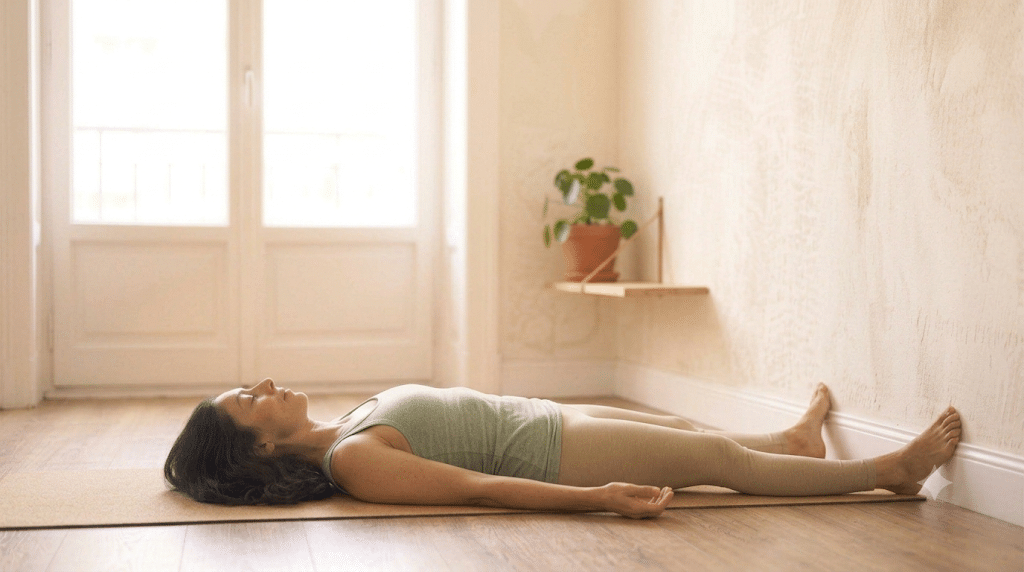
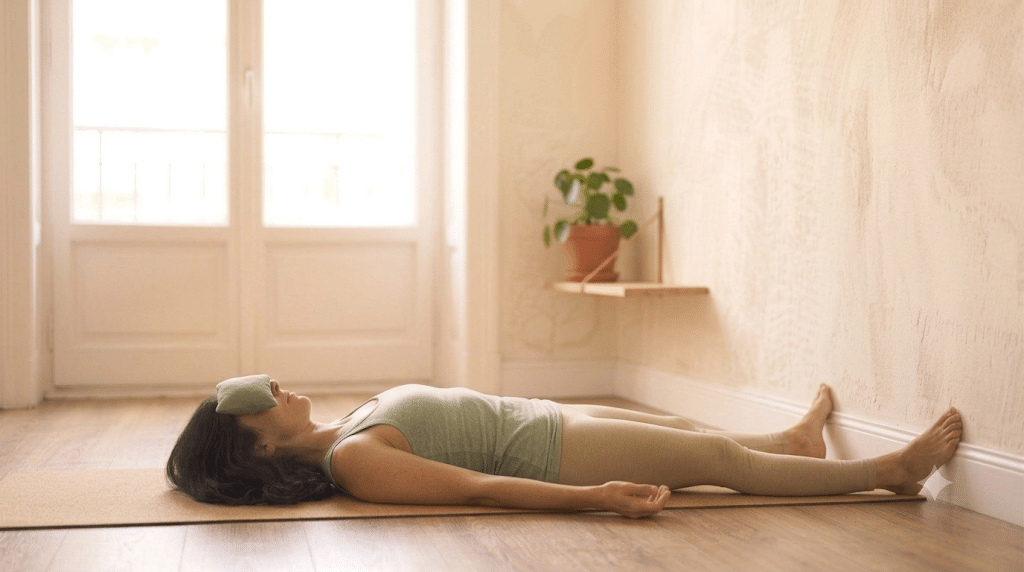
Final relaxation (savasana) — Lie flat and completely still for five to ten minutes, allowing everything you’ve just done to actually integrate.
I always begin my own restorative practice on a cork yoga mat — the natural texture gives me an instant sense of grounding that synthetic mats simply cannot replicate, especially during those longer holds.
Using Breathwork to Deepen Parasympathetic Activation
Breath is the fastest lever you have for shifting your nervous system state, faster even than the poses themselves. Box breathing — inhaling for four counts, holding for four, exhaling for four, holding for four — is an excellent entry point if longer exhales feel difficult at first.
Once that feels natural, move toward 4-7-8 breathing, where you inhale for four counts, hold for seven, and exhale for eight. The extended hold and exhale combination is particularly effective before bed, when a racing mind is most likely to keep you awake.
Placing a yoga bolster beneath your knees during these breathing exercises completely changes the experience — your lower back releases in a way that feels almost effortless, which makes it much easier to stay present with the breath itself.
Building a Sustainable Nervous System Practice
Consistency matters more than duration when it comes to rewiring a stressed nervous system. Ten focused minutes every evening will move you further than one exhausting ninety-minute session on a Sunday you’ll never repeat.
I encourage clients to anchor their practice to something already automatic, like right after brushing their teeth or right before checking their phone in bed. What would it look like if calming your nervous system took less effort than scrolling does?
If you have never tried an eye pillow during your final relaxation, I genuinely encourage you to — the gentle weight signals your nervous system that it is safe to fully let go, often deepening the practice within just a few breaths.
Key Takeaways
→ The parasympathetic nervous system is your body’s built-in brake, responsible for rest, digestion, and recovery
→ Extended exhales directly stimulate the vagus nerve and shift you out of stress mode
→ Slow-hold poses work differently than a fast-paced vinyasa class, and both have their place
→ Research links consistent yoga practice to increased GABA and reduced anxiety
→ Small, consistent daily practice outperforms occasional long sessions
Conclusion
Parasympathetic yoga gives your nervous system permission to finally exhale after carrying tension it was never meant to hold indefinitely. You don’t need to master every pose or breathe perfectly to benefit from this practice.
What matters is showing up gently and consistently, even if that means just five minutes with your legs up the wall tonight. Your nervous system doesn’t need perfection from you, only repetition and patience.
I’d love for you to try tonight’s twelve-pose sequence and notice what shifts, even slightly, in how your body feels afterward. Come back to SomaticYogaFlow.com and let me know in the comments how it went.
Frequently Asked Questions
How do you activate the parasympathetic nervous system with yoga?
You activate it primarily through slow, extended exhales combined with sustained, supported poses held for several minutes at a time. Poses like legs up the wall, supported child’s pose, and reclined bound angle all encourage this shift by lowering heart rate and signaling safety through the vagus nerve. Breath is actually the more powerful tool here, so even without a formal pose, a longer exhale alone begins the process.
What yoga poses are best for vagus nerve stimulation?
Restorative, supported poses tend to work best, particularly legs up the wall, supported child’s pose, and gentle supine twists. These poses are held far longer than in a typical flow class, usually three to ten minutes, which gives your vagus nerve time to actually respond. Pairing any of these with extended exhale breathing amplifies the effect considerably.
How long does it take for yoga to calm the nervous system?
Some people notice a shift within a single session, particularly a drop in heart rate or a wave of heaviness during final relaxation. Lasting changes in baseline anxiety and vagal tone, however, typically build over several weeks of consistent practice. Most of my clients report a noticeable difference somewhere between two and four weeks of near-daily practice.
Can yoga help with anxiety and chronic stress?
They overlap significantly but aren’t identical terms. Restorative yoga refers to a style using extensive props and long holds, while parasympathetic yoga is a broader concept describing any practice specifically designed to shift you into rest-and-digest mode. In practice, most restorative yoga classes are built around parasympathetic principles, so the two often go hand in hand.
Is restorative yoga the same as parasympathetic yoga?
They overlap significantly but aren’t identical terms. Restorative yoga refers to a style using extensive props and long holds, while parasympathetic yoga is a broader concept describing any practice specifically designed to shift you into rest-and-digest mode. In practice, most restorative yoga classes are built around parasympathetic principles, so the two often go hand in hand.
How many poses should a parasympathetic yoga sequence include?
There’s no fixed rule, but somewhere between eight and twelve poses tends to give the nervous system enough variety without making the session feel rushed. What matters far more than the exact number is the pace, since each pose needs one to five minutes to actually produce a physiological shift. A longer sequence like the twelve poses in this article works especially well for evening practice when you have more time to unwind.