
Your body has been holding your stress for you, and it is tired. Maybe it shows up as a jaw that never fully unclenches, shoulders that live somewhere near your ears, or a tightness in your chest that no amount of deep breathing seems to touch. You have probably tried to stretch your way out of it, only to find the tension creeps right back within a day or two.
I want you to know that this is not a willpower problem, and it is not because you are doing yoga wrong. Traditional stretching asks your muscles to lengthen while your nervous system is still on high alert, and the body simply will not let go under those conditions. It is like trying to open a locked door harder instead of finding the key.
That key, for so many of the women I work with, has been somatic yoga. Unlike a typical flow class built around how a pose looks, somatic yoga is built around how a pose feels from the inside, using slow, mindful movement to help your nervous system feel safe enough to release. In this article, I am walking you through the fifteen best somatic yoga poses for beginners, exactly how to move through them, and a simple five-step practice you can start tonight.
Table of Contents
Why Somatic Yoga Poses Work Differently for Beginners
Most beginners come to yoga expecting to be told how a pose should look. Somatic yoga poses ask something different of you: to notice how a movement feels, to sense where you are gripping, and to let that awareness guide the shape rather than a mirror or an instructor’s cue. This internal focus, called interoception, is exactly what makes these poses so effective for calming an overactive nervous system.
Dr. Stephen Porges’ polyvagal theory helps explain why this works so well for anxiety and chronic stress. When your body senses safety through slow, small, controlled movements, your vagus nerve signals your nervous system to shift out of fight-or-flight and into a state of rest. Somatic yoga poses are designed specifically to send that safety signal, which is why beginners often notice a shift in how they feel within a single session.
This is different from pushing into a deep stretch and hoping tension disappears. It is patient, curious, and entirely led by sensation rather than performance.
Getting Started with Somatic Yoga Poses at Home
You do not need a studio, a special outfit, or years of flexibility training to begin. What you do need is a quiet corner, about twenty minutes, and a surface that supports your joints without feeling harsh underneath you.
I always begin my practice on a cork yoga mat, since the natural texture gives me an instant sense of grounding that synthetic mats simply cannot replicate.
A few props make an enormous difference for beginners specifically. A folded blanket under your knees or hips protects your joints during floor poses, and having something soft nearby means you will actually want to return to your mat tomorrow. Keeping a yoga blanket within reach also lets you transition smoothly between poses without your body ever feeling exposed to cold or hard flooring.
Once your space feels welcoming rather than clinical, the poses themselves become much easier to settle into.
Grounding Poses to Begin Your Somatic Yoga Practice
These first four poses are about arriving in your body before asking it to do anything more.
Reclined Body Scan
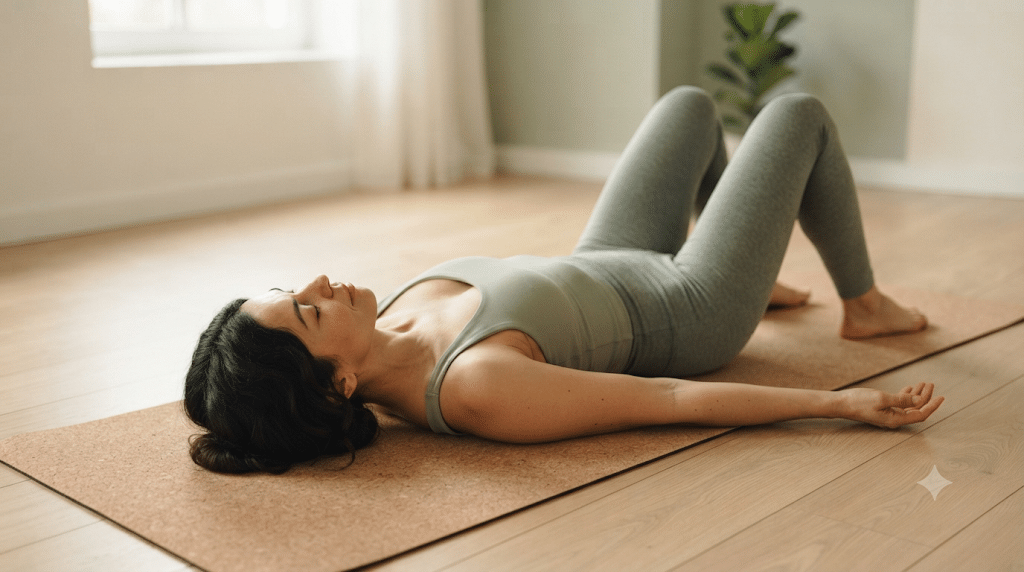
Lying on your back with knees bent, feet flat, you simply notice. Start at your feet and slowly move your attention up through your legs, hips, belly, chest, shoulders, and face, pausing anywhere you feel tightness without trying to fix it yet.
Supported Constructive Rest
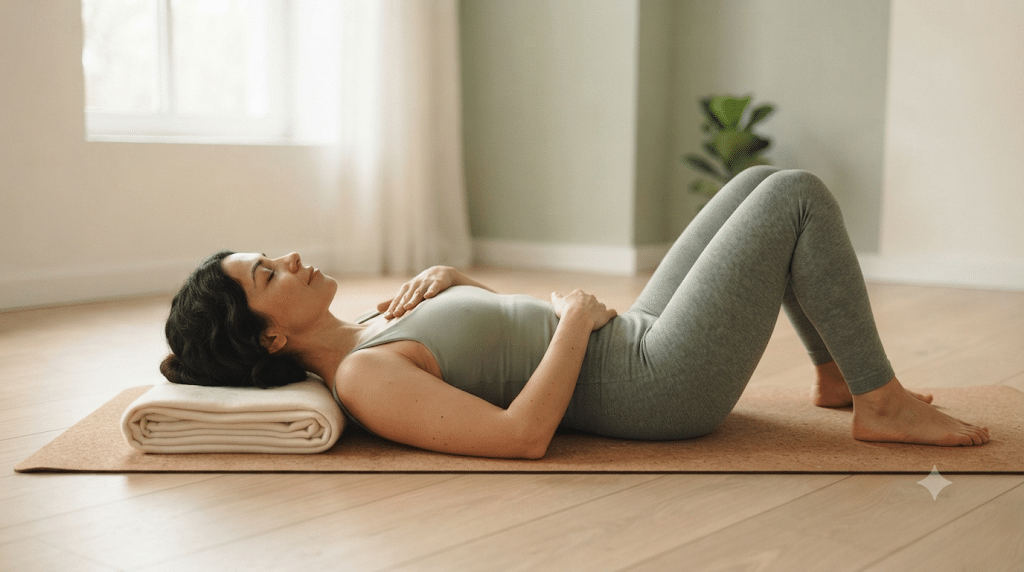
Knees bent, feet hip-width apart, arms resting wherever they feel supported. This pose lets your spine settle into the floor gradually rather than forcing it flat.
Pelvic Tilts
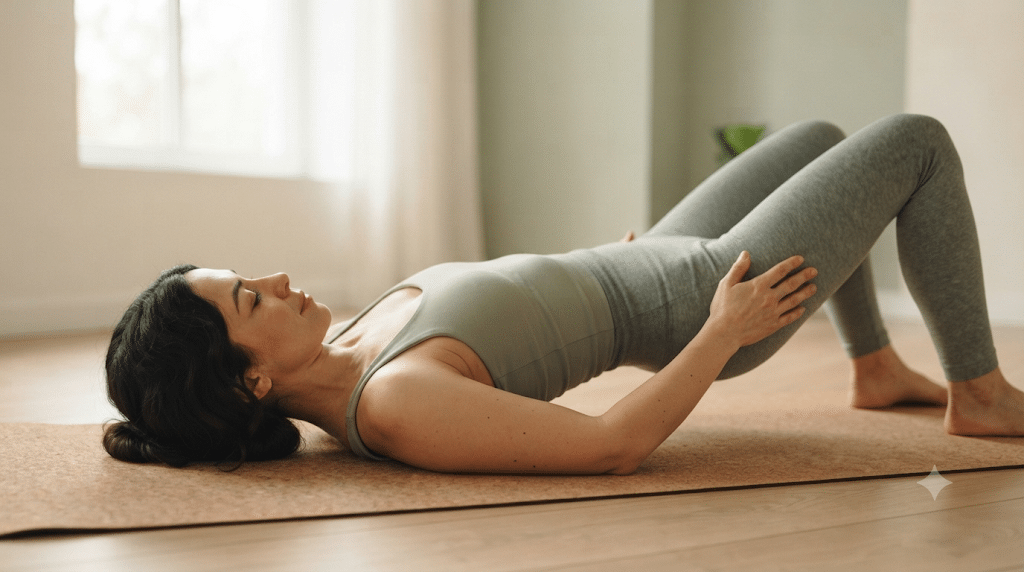
Small, slow rocking of your pelvis forward and back, tracking exactly where your low back and hips move together. This is often the first place beginners feel a genuine release.
Seated Grounding Breath
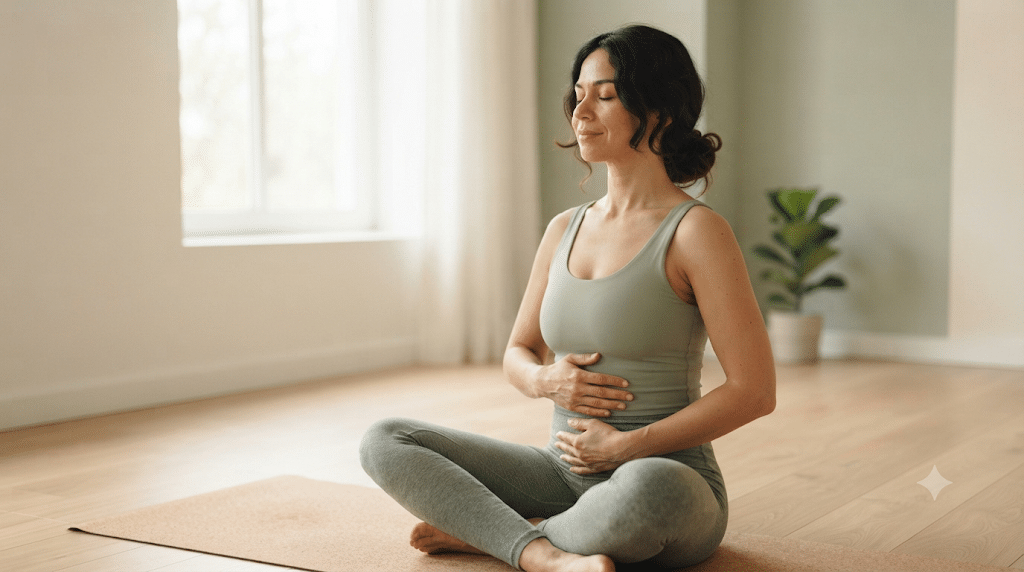
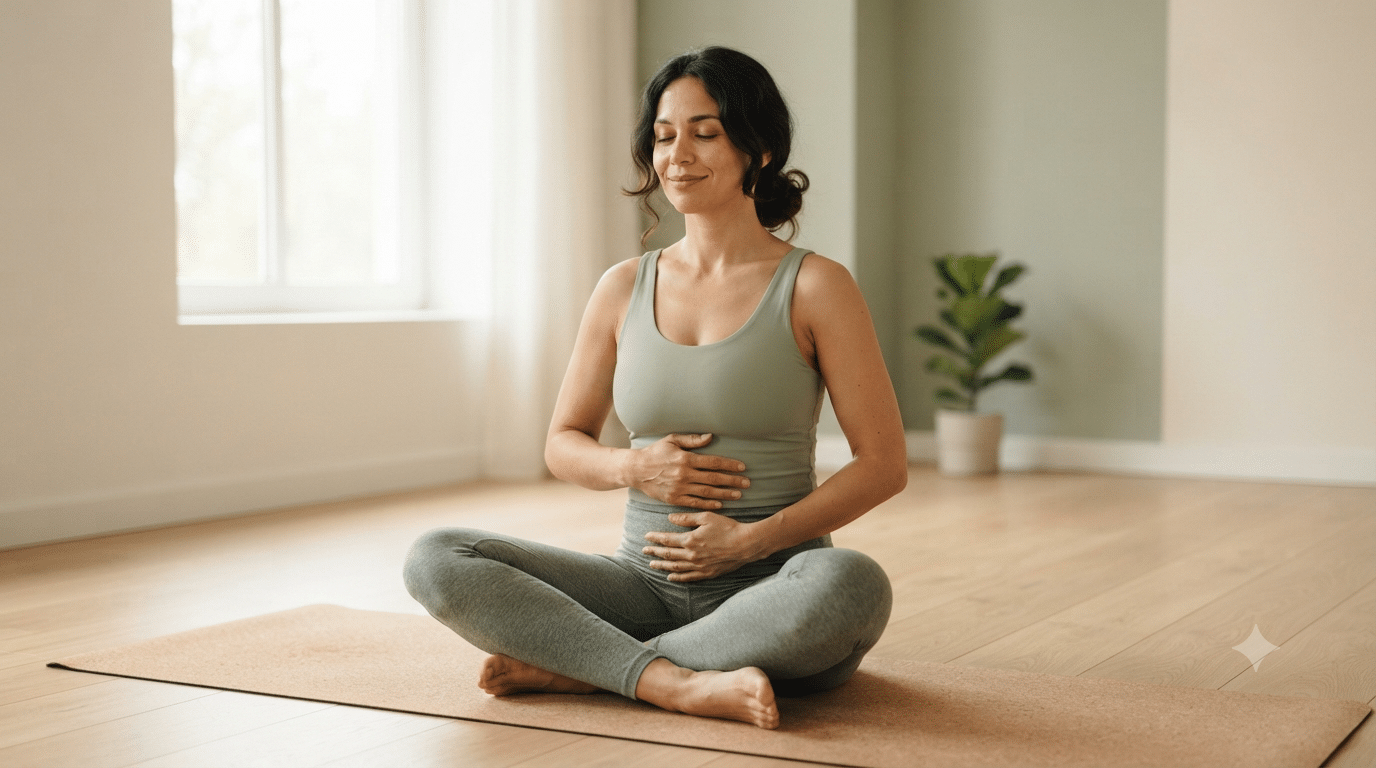
Sitting cross-legged or on a cushion, hands resting on your belly, you simply feel your breath move your hands. Is your breath shallow and quick, or slow and full? Noticing without judgment is the entire point.
Once you feel anchored in these grounding shapes, your spine is ready for gentle movement.
Poses for the Spine and Ribcage
Somatic yoga treats the spine as a place where a huge amount of stress physically lives, and these next four poses work with that directly.
Cat-Cow with Micro-Movements
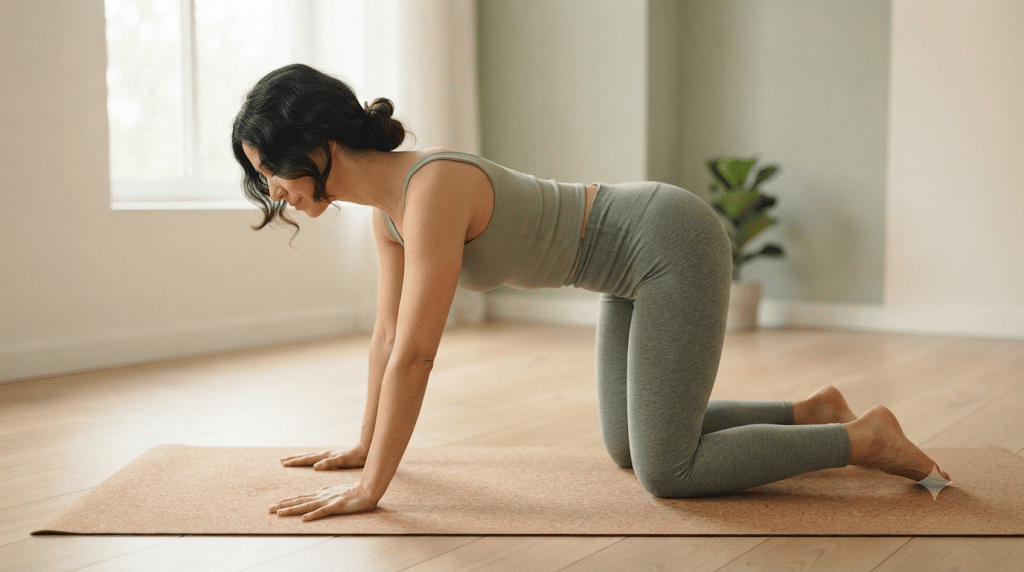
Instead of the full range you may have seen in a typical class, you move through only a few degrees at a time, feeling each vertebra shift individually. This slower version teaches your nervous system that movement can happen without bracing.
Seated Side Body Waves
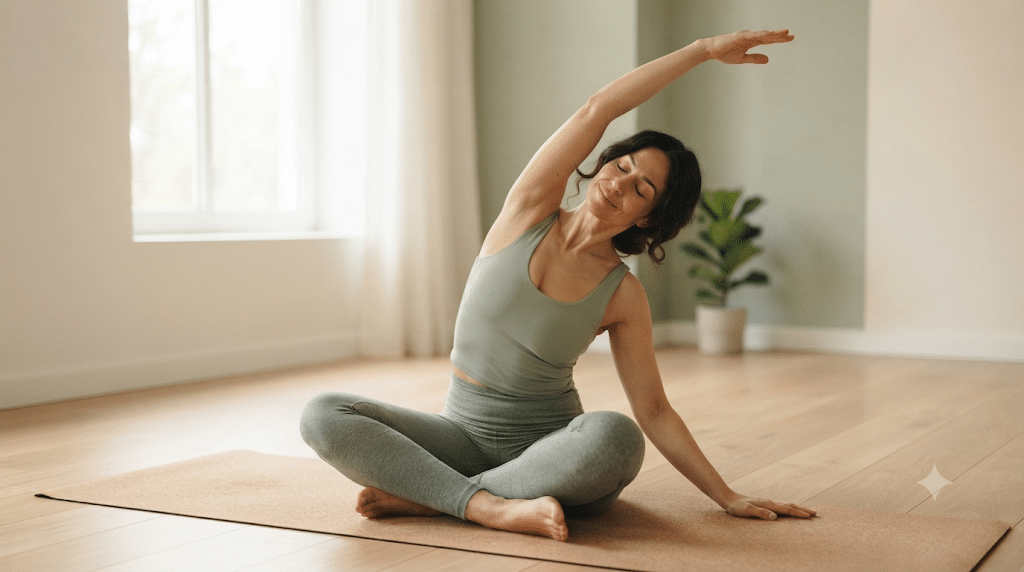
Sitting tall, you slowly lean side to side, feeling your ribcage expand and contract like an accordion. Most beginners are surprised by how restricted one side feels compared to the other.
Thread the Needle
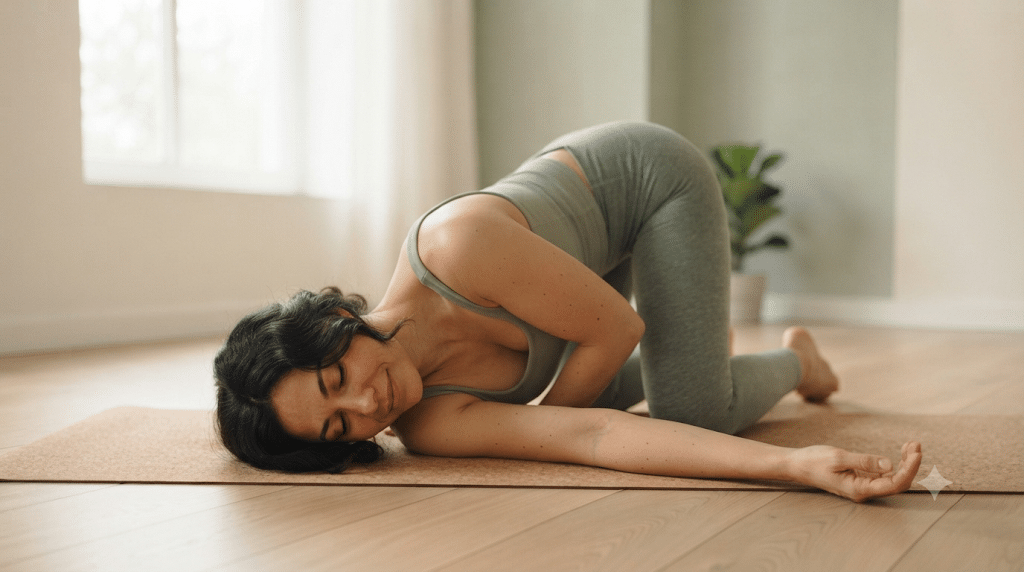
From hands and knees, one arm slides underneath the other, gently twisting through the upper back and shoulder. This pose is particularly good for the tension that builds from hours at a desk.
Supported Fish Pose
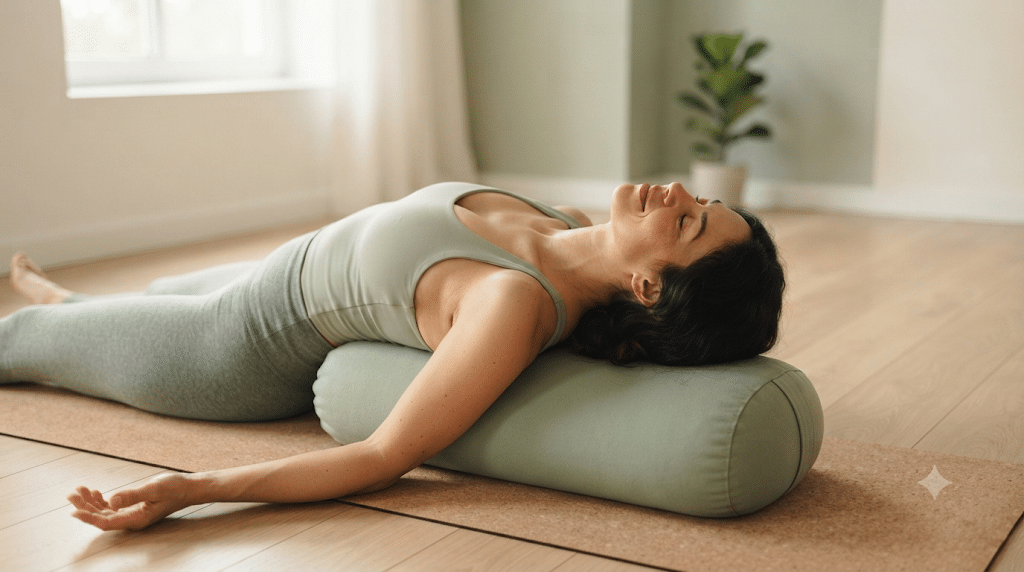
Lying back over a bolster or rolled blanket, your chest opens naturally without any active effort. I still remember the first time I tried this pose years ago, half-expecting it to feel like a deep backbend, and instead feeling an almost immediate wave of relief through my chest as if I had been holding my breath for hours without realizing it.
Placing a yoga bolster beneath your upper back for this pose completely changes the experience, letting your shoulders drop open in a way that feels almost effortless.
From here, we move the awareness downward into the hips and legs, where so much emotional tension quietly collects.
Hip and Lower Body Releases
The hips are notorious for storing stress, and these poses give that area somewhere safe to let go.
Windshield Wiper Legs
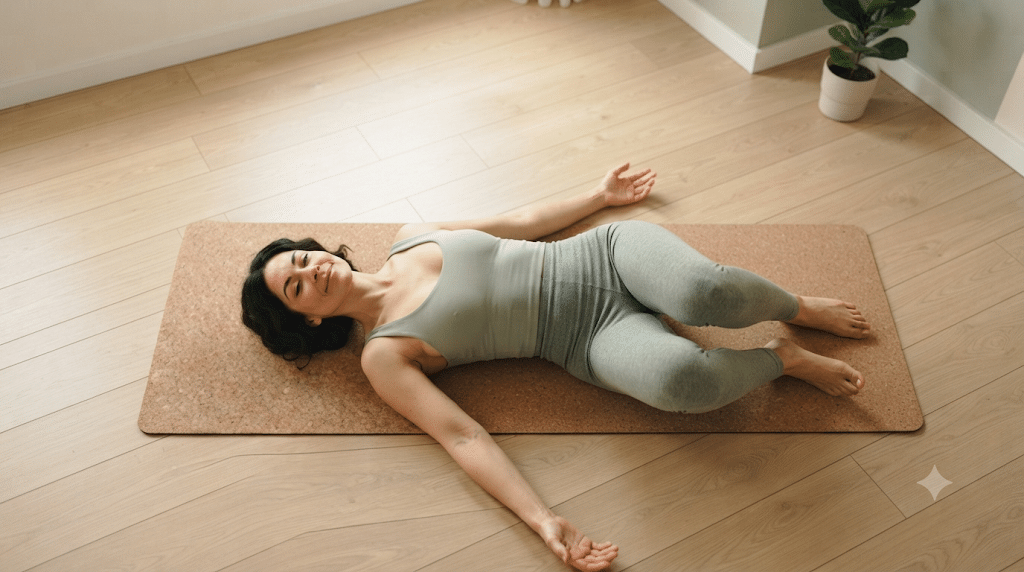
Lying on your back, knees bent together, you slowly let your legs fall side to side like windshield wipers. It is a small movement, but it reaches deep into the hip joints in a way stretching alone rarely does.
Figure Four Release
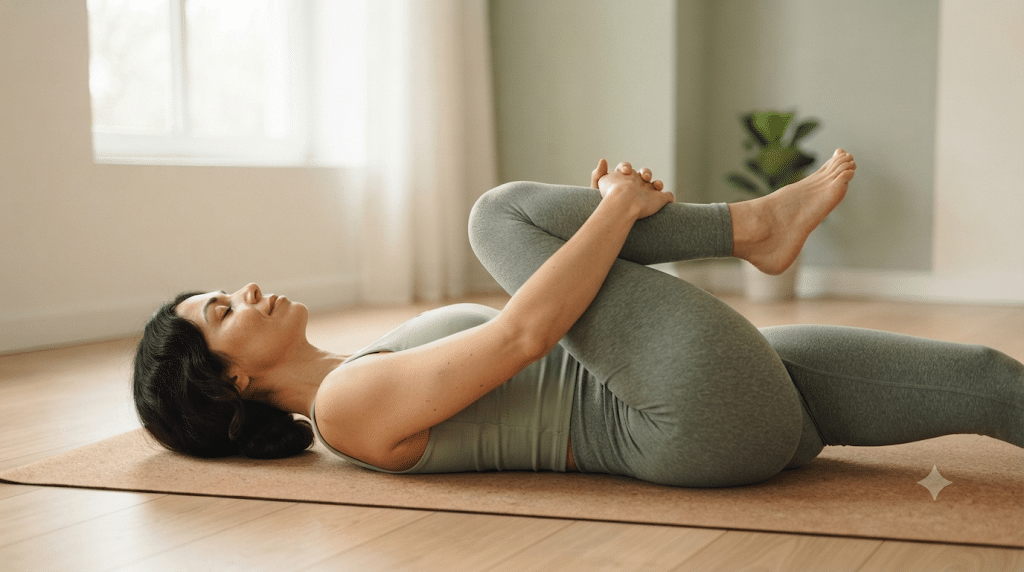
Ankle crossed over the opposite knee, you gently draw the legs toward your chest. This targets the outer hip and glute, an area that carries an enormous amount of tension for people who sit for long hours.
Supported Butterfly
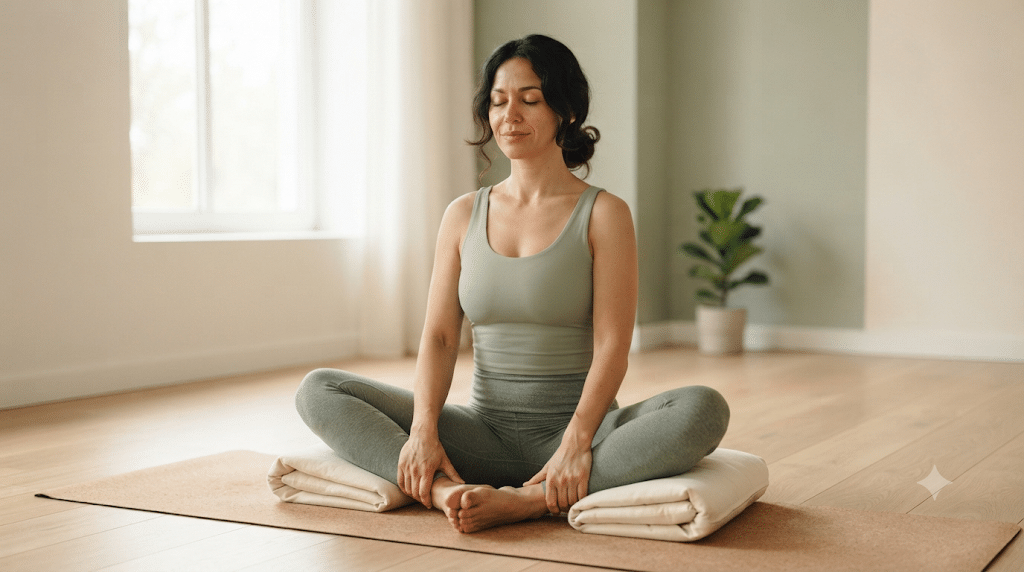
Soles of the feet together, knees resting outward on cushions or blankets, this pose invites the inner thighs and hips to soften without any forcing. Gentle support underneath the knees here makes an enormous difference for beginners with tighter hips.
Somatic Squat
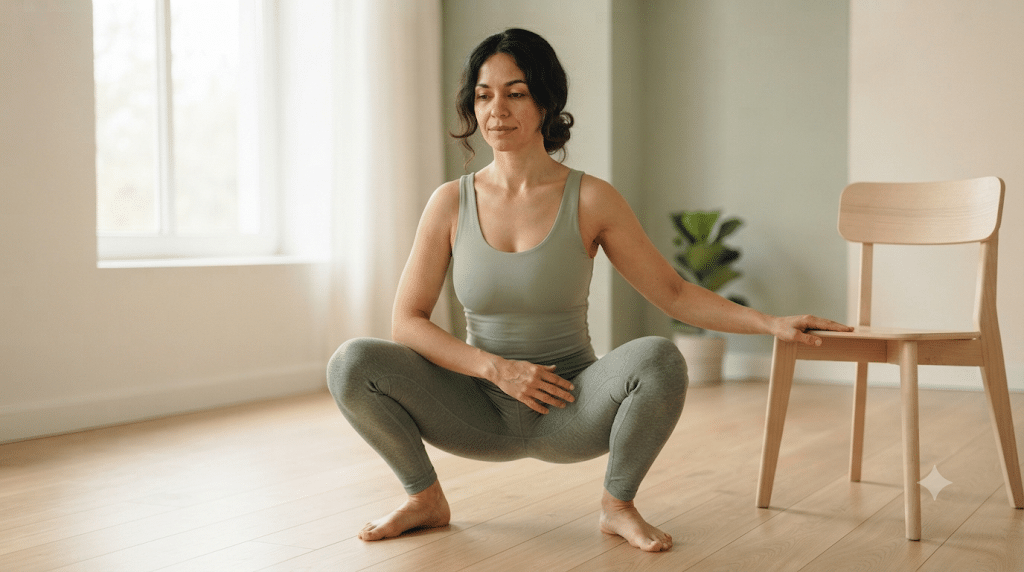
A slow, supported lowering into a shallow squat, holding onto something stable if needed. This pose reconnects you with a movement pattern your body knew instinctively as a child.
Your body has now moved through grounding, spine work, and hip release, so the final poses are about integrating everything before you rest.
Poses to Close Your Somatic Yoga Practice
Closing poses matter just as much as opening ones, because they teach your nervous system that the calm state you just created can be trusted to stay.
Legs Up the Wall
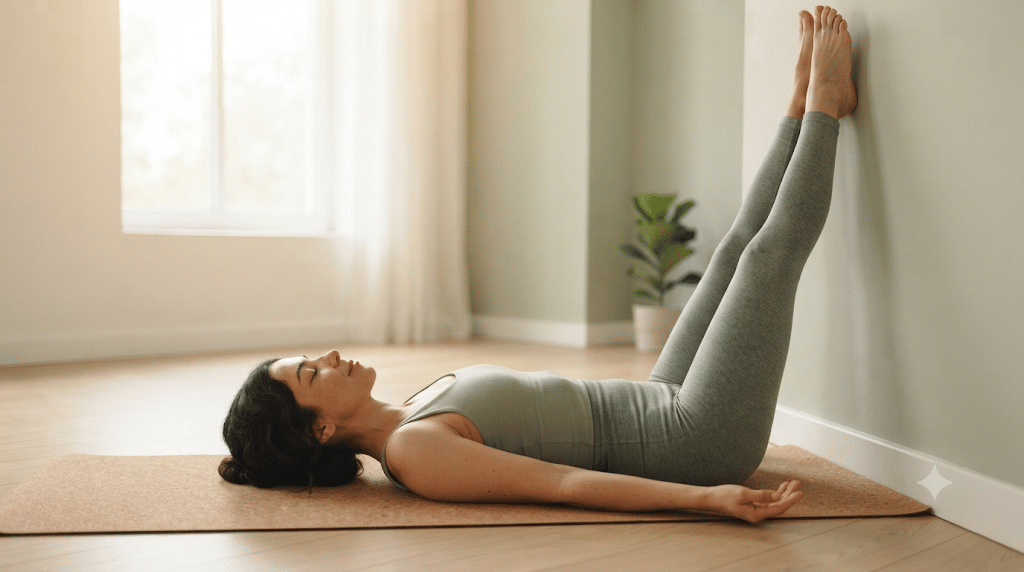
Hips close to the wall, legs resting vertically, this pose is one of the most reliably calming shapes in any yoga practice. It gently shifts fluid in the body and tends to slow the heart rate within a few minutes.
Reclined Twist
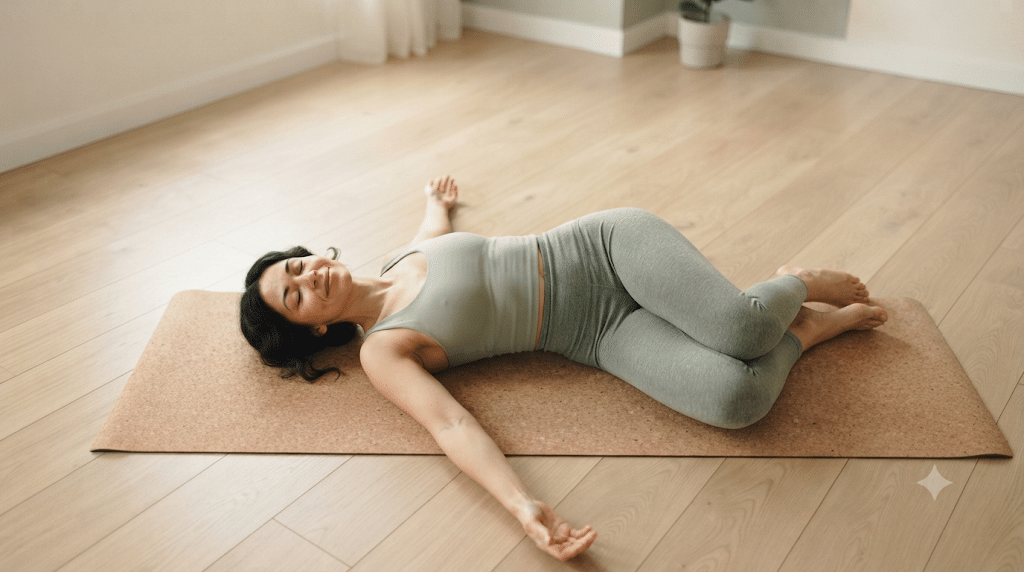
Knees dropping gently to one side while shoulders stay grounded, this pose wrings out tension along the spine. Moving slowly through the twist matters far more than how deep it goes.
Yoga Nidra Rest
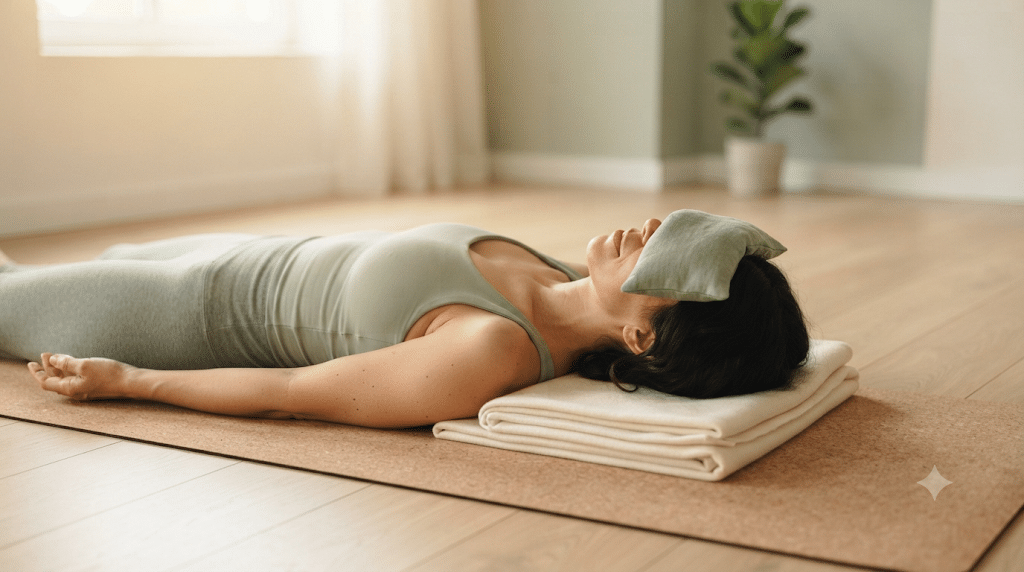
Lying flat with full body support, eyes closed, you simply allow stillness. If you have never tried an eye pillow during this kind of rest, I genuinely encourage it, since the gentle weight signals your nervous system that it is safe to fully let go.
💚 Sofia’s Tip: If your mind keeps pulling you out of stillness during Yoga Nidra rest, try silently naming five things you can feel against your skin. It brings your attention back into your body without any effort at all.
A published study from Boston University, led by researcher Chris Streeter, found that participants who practiced yoga consistently showed higher GABA levels in the brain, a neurotransmitter directly linked to reduced anxiety, compared to those who simply walked for exercise. This is one of the clearest pieces of evidence that these slow, sensation-based poses are not just relaxing in the moment, but are genuinely reshaping how your nervous system regulates stress over time.
A Simple 5-Step Somatic Yoga Practice for Beginners
If the fifteen poses above feel like a lot to remember, here is exactly how I would guide you through your very first session.
- Lie down in Supported Constructive Rest for two full minutes, simply noticing your breath without changing it.
- Move slowly through five rounds of Cat-Cow with Micro-Movements, following your spine rather than a count.
- Settle into Figure Four Release on each side for one minute, breathing into whatever tightness you notice.
- Rest in Legs Up the Wall for five minutes, letting your nervous system fully receive the calm you have created.
- Close in Yoga Nidra Rest for five minutes, allowing your body to integrate everything without rushing toward your next task.
This entire sequence takes under twenty minutes, and it touches every major area we covered above.
Common Mistakes Beginners Make with Somatic Yoga Poses
The most frequent mistake I see is beginners trying to move at the pace of a typical vinyasa class. Somatic movement is intentionally slow, and rushing through it defeats the entire nervous system benefit these poses are designed to offer.
The second mistake is judging your body for feeling stiff or restricted in certain poses. That restriction is information, not failure, and it usually softens over several sessions rather than one.
Skipping props is the third common error, especially among beginners who assume support is only for advanced practitioners recovering from injury. In somatic yoga, props are not a shortcut. They are often what allows your nervous system to trust the pose enough to actually let go.
How Often Beginners Should Practice Somatic Yoga Poses
Consistency matters far more than duration when you are just beginning. Three short sessions a week, even ten minutes each, will teach your nervous system more than one long session every other Sunday.
Most of the women I work with notice a real shift somewhere between week two and week four, once their body starts recognizing the pattern of safety these poses create. Your nervous system is learning a new habit, and like any habit, it needs repetition more than intensity.
Key Takeaways → Somatic yoga poses focus on internal sensation rather than how a pose looks → Slow, small movements signal safety to your nervous system through the vagus nerve → Props like bolsters and blankets are essential support, not shortcuts → A simple 5-step sequence can be practiced in under twenty minutes → Consistency of three short sessions weekly matters more than one long session
You do not need to master all fifteen poses at once, and you certainly do not need to do them perfectly. What matters is showing up gently and consistently, letting your body relearn at its own pace that it is safe to soften.
Start with just the five-step sequence tonight if that feels more manageable than the full list. Your nervous system will not know the difference between a big commitment and a small one, only that you kept showing up. I would love to hear which pose brought you the most relief, so come share your experience in the comments or explore more somatic practices over at SomaticYogaFlow.com.
Frequently Asked Questions
What is the difference between somatic yoga and regular yoga?
Regular yoga often emphasizes alignment and how a pose looks from the outside, while somatic yoga emphasizes internal sensation and how a movement feels from within. Somatic sequences tend to be slower, smaller, and more exploratory, with far less focus on achieving a particular shape. This makes somatic yoga especially accessible for beginners who feel intimidated by flexibility requirements in traditional classes.
Can somatic yoga help with anxiety?
Yes, somatic yoga is widely used specifically for anxiety because its slow, controlled movements help activate the parasympathetic nervous system through the vagus nerve. Many beginners report feeling calmer within a single session, though the deeper regulation benefits tend to build over several weeks of consistent practice. It works especially well alongside other anxiety management tools rather than as a replacement for professional support.
How long should a beginner practice somatic yoga each day?
Ten to twenty minutes is plenty for beginners, and even five focused minutes can create a noticeable shift on a busy day. What matters more than duration is practicing several times a week rather than doing one long session occasionally. Short, consistent sessions teach your nervous system the pattern of safety far more effectively than infrequent long ones.
Do I need props for somatic yoga poses?
Props are highly recommended, especially for beginners, since bolsters and blankets allow your body to fully release into a pose without straining to hold a shape. A rolled blanket, bolster, or even firm pillows from home can substitute for specialized equipment when you are just starting out. The goal is always support, never performance, so use whatever helps your body feel safest.
Is somatic yoga good for chronic pain?
Somatic yoga is often gentler on joints and muscles than traditional yoga styles, which makes it a popular option for people managing chronic pain. Because the movements are slow and self-directed, practitioners can stay well within a comfortable range rather than pushing into pain. Many people with conditions like fibromyalgia or chronic low back pain find somatic approaches more sustainable long term than higher-intensity styles.