Your chest feels tight before your mind even knows why. Your shoulders creep toward your ears somewhere between the first email and the third cup of coffee. By evening, you are exhausted in a way that sleep does not seem to fix.
This is not weakness, and it is not something you are imagining. Anxiety lives in the nervous system long before it becomes a thought, which means the racing mind you are trying so hard to calm is often just an echo of what your body has already decided. You have probably tried to think your way out of it — journaling, reframing, breathing apps — and felt frustrated when the tension stayed put.
Somatic yoga for anxiety works differently because it starts where the anxiety actually begins: in the body’s stored tension and nervous system patterns, not in the story your mind tells about them. In this article, you will learn seven somatic yoga poses that calm the nervous system directly, along with a simple daily practice you can start tonight.
Table of Contents
Why Somatic Yoga for Anxiety Works When Willpower Doesn’t
Anxiety is not purely psychological. It is a physiological state, held in tight hips, shallow breath, and a nervous system stuck in high alert.
Somatic yoga targets that physical layer directly instead of asking your mind to override it. In 2010, researchers at Boston University found that a single yoga session raised GABA levels in the brain — the same calming neurotransmitter that many anti-anxiety medications target — a finding published in the Journal of Alternative and Complementary Medicine.
That is not a coincidence. Slow, felt-sense movement literally shifts brain chemistry, which is why somatic yoga for anxiety often produces relief that talk-based strategies alone cannot reach.
What Makes Somatic Yoga Different From Regular Yoga
Traditional yoga often chases alignment — how a pose should look from the outside. Somatic yoga asks a different question: how does this movement feel from the inside?
You move slowly, you pause often, and you let sensation guide you rather than a mirror or an instructor’s cue. There is no pose to perfect here, only a body to listen to. That distinction matters enormously for anxiety, because when you practice for the sensation rather than the shape, your nervous system finally gets the message that it is safe to soften.
I remember teaching a private client, a hospital nurse in her forties, who told me she had done years of vinyasa without ever feeling calmer afterward. Within two weeks of switching to slow somatic movement, she said her chest finally stopped feeling like it was in a vice by the time she left the mat. That shift is what somatic yoga for anxiety is designed to create.
Pose 1 and 2: Grounding Through the Feet and Hips
Rooted Mountain with Sway
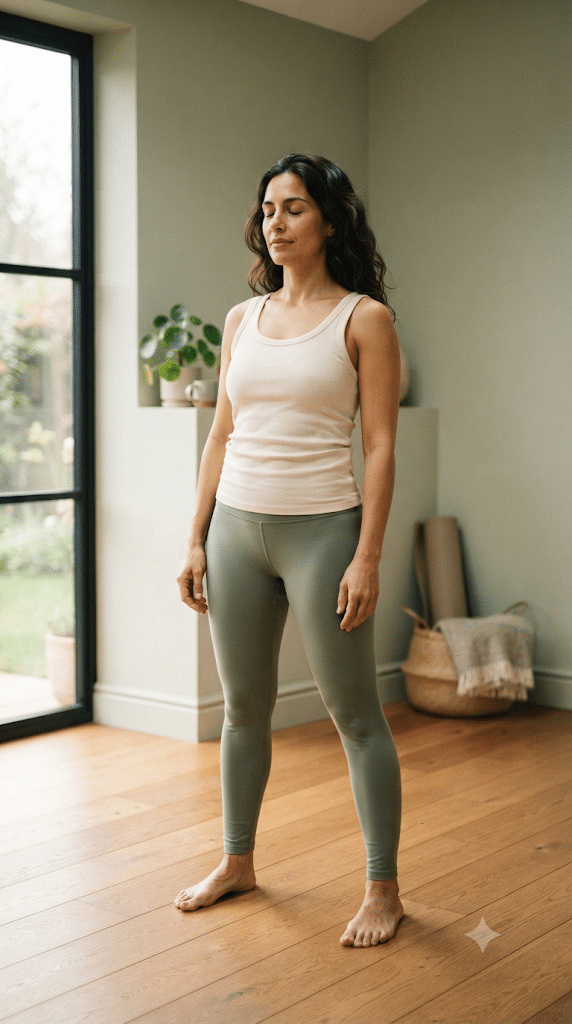
Start standing, feet hip-width apart, and simply notice where your weight lands. Let your body sway gently forward and back, side to side, in tiny movements that feel almost imperceptible from the outside.
This isn’t a pose you hold rigidly; it’s a pose you inhabit. The slow sway signals safety to your inner ear and vestibular system, which are deeply tied to your sense of security in the world.
Supported Child’s Pose
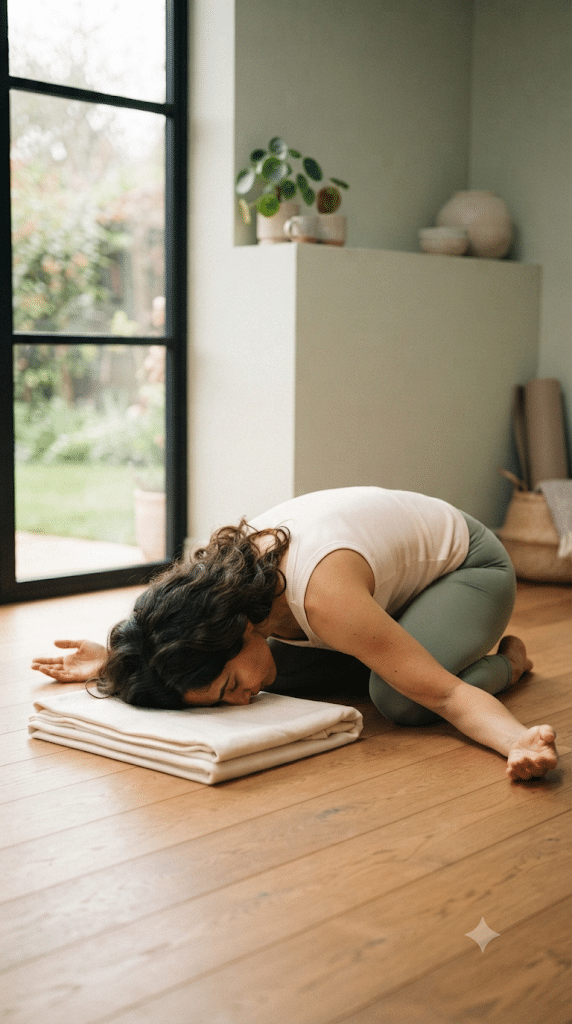
Lower to your knees and fold forward, resting your forehead on the floor or a cushion. Widen your knees enough that your belly can breathe freely against your thighs.
I always begin restorative sessions on a soft yoga blanket beneath my knees — it takes the pressure off my joints instantly and lets me stay in the pose long enough for my breath to actually slow down.
Pose 3 and 4: Releasing Tension Through the Spine
Cat-Cow with a Pause
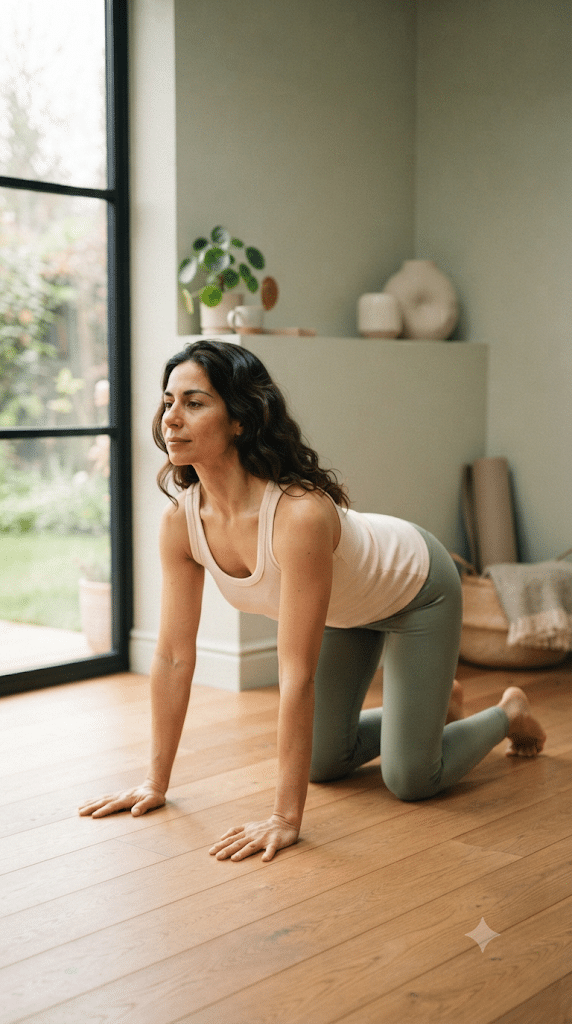
Move slowly between arching and rounding your spine on hands and knees, but add something most instructors skip: a full three-second pause at the top of each arch. That pause is where the nervous system actually catches up to the movement.
Isn’t it strange how much tension we carry in the space between our shoulder blades without ever noticing? This pose gently invites that tension to surface and release.
Reclined Twist
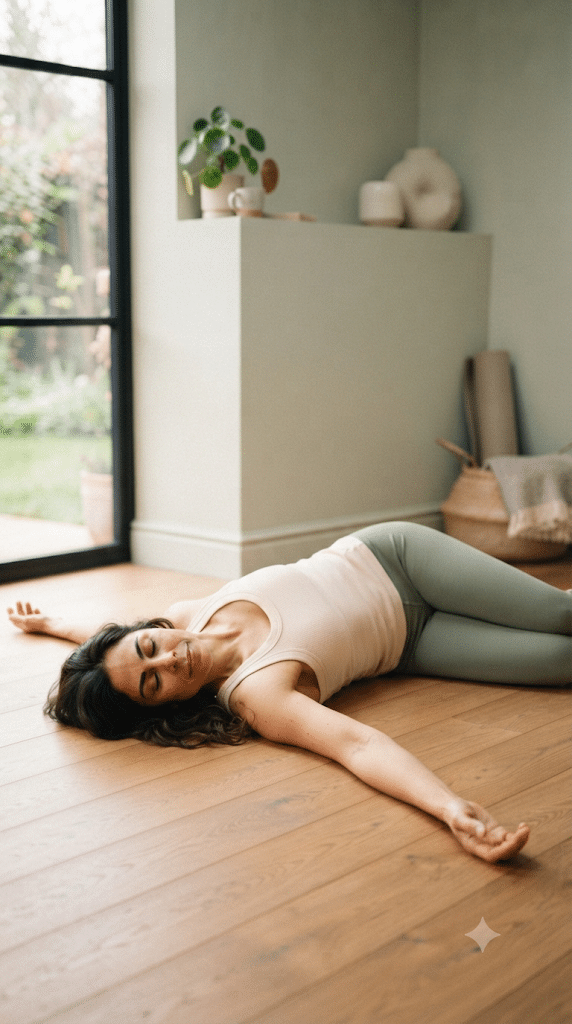
Lying on your back, drop both knees to one side while your arms open wide. Stay for at least ten slow breaths before switching sides, letting gravity do the work rather than forcing the stretch.
Reclined twists gently compress and release the vagus nerve pathway along your spine, which plays a central role in shifting your body out of fight-or-flight.
Pose 5 and 6: Opening the Chest and Calming the Breath
Supported Fish Pose
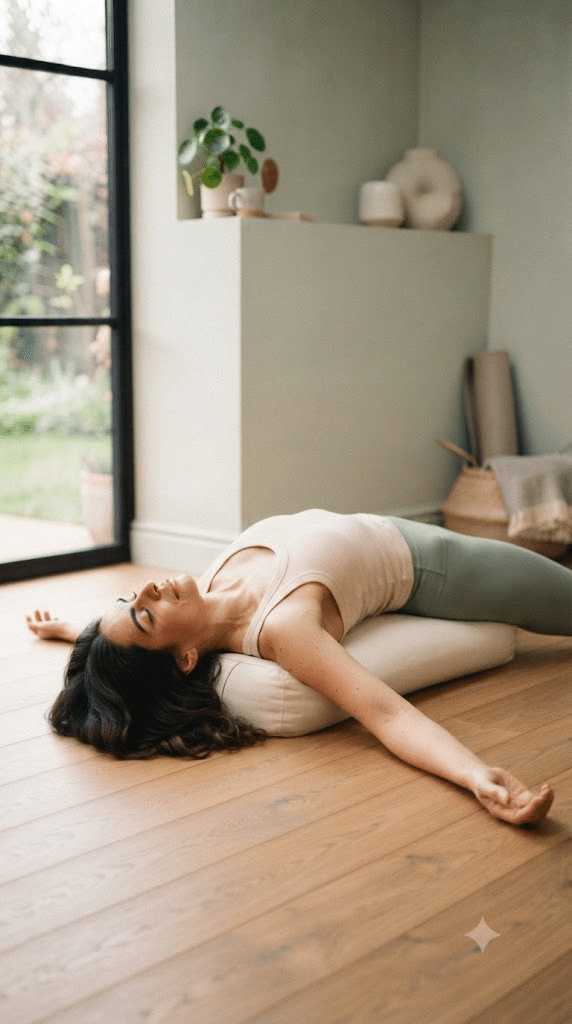
Place a bolster lengthwise beneath your spine and let your chest open toward the ceiling as your arms fall open. Placing a yoga bolster beneath your spine completely changes this pose — your chest opens without any strain, and your breath deepens almost on its own.
Anxious breathing tends to stay shallow and high in the chest. This gentle backbend physically counters that pattern by inviting the breath lower and slower without any forced technique.
Legs Up the Wall
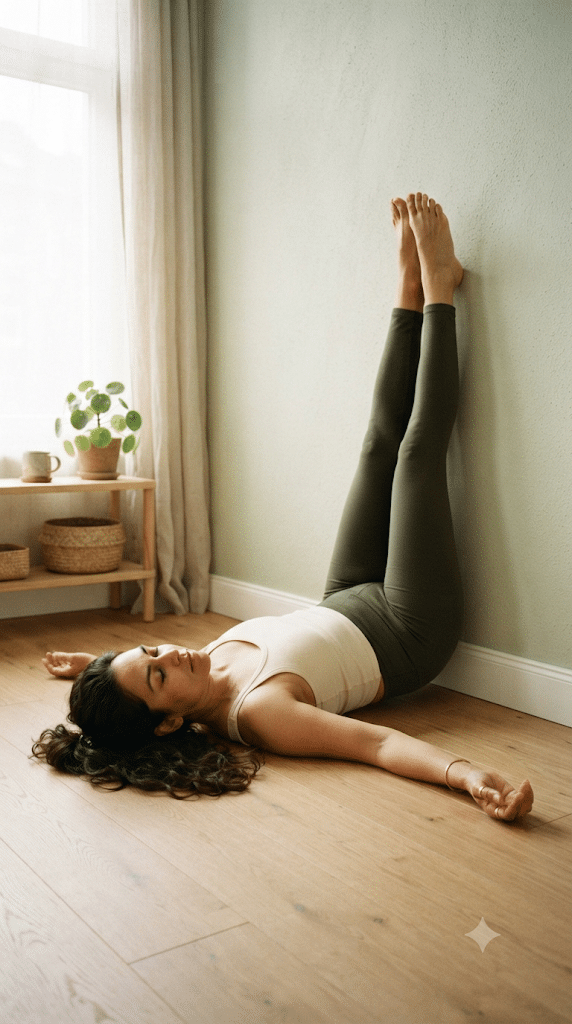
Sit sideways against a wall, then swing your legs up as you lower your back to the floor. Stay here for five to fifteen minutes, arms resting open at your sides.
This is one of the simplest and most reliable nervous system resets in somatic yoga for anxiety, and it requires no strength or flexibility at all.
Pose 7: The Final Release
Body Scan Savasana
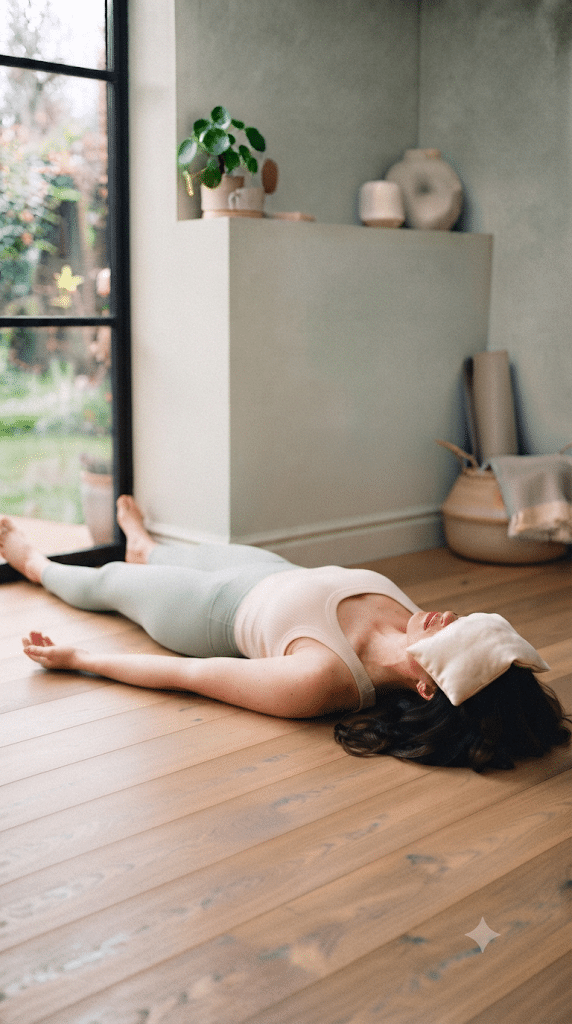
Lie flat, close your eyes, and slowly bring your attention through each part of your body from your feet to your scalp. Notice where tension remains without trying to force it away.
If you have never tried an eye pillow during a body scan, I genuinely encourage you to — the gentle weight signals your nervous system that it is finally safe to let go completely.
💚 Sofia’s Tip: If your mind keeps pulling you out of the body scan, silently name what you feel — “tight,” “warm,” “heavy” — instead of describing why. Naming sensation, not story, is what keeps this practice somatic.
How to Build a Daily Somatic Yoga for Anxiety Practice
Consistency matters far more than intensity when it comes to calming an anxious nervous system. Here is exactly how I recommend starting.
- Choose one fixed time each day, ideally morning or right before bed, so your nervous system learns to expect the practice.
- Start with just two poses rather than all seven, giving your body time to adjust without overwhelm.
- Move at half the speed you think is necessary; somatic work rewards slowness far more than repetition.
- Pause between poses and simply notice how your body feels before moving to the next one.
- Add one new pose per week until all seven feel familiar in your body.
- Keep a simple one-line note after each session — even just “calmer” or “still tense” — to track patterns over time.
Building this rhythm gradually is what turns somatic yoga for anxiety from an occasional relief into a lasting nervous system shift.
Common Mistakes That Undo the Calming Effect
The most common mistake I see is rushing. Somatic yoga loses its nervous-system benefit the moment it becomes another item to check off quickly.
The second mistake is skipping the pauses between poses, which is actually where most of the calming happens. Slow transitions matter as much as the poses themselves, so resist the urge to flow continuously from one shape to the next.
When to Practice and What Results to Expect
Morning practice tends to set a calmer baseline for the whole day, while evening practice helps release what the day has accumulated. Either time works, as long as it becomes consistent rather than sporadic.
Most people notice a shift in physical tension within the first week and a deeper shift in overall anxiety within four to six weeks. I always remind my students that somatic yoga for anxiety is not a quick fix — it’s a slow rebuilding of trust between your mind and your body.
Key Takeaways
→ Anxiety is physical first — somatic yoga addresses the body’s stored tension directly
→ Slowness is the mechanism — rushing through poses cancels the nervous system benefit
→ Pauses matter as much as poses — the nervous system catches up in the stillness between movements
→ Consistency beats intensity — a short daily practice outperforms occasional long sessions
→ Relief builds gradually — expect physical shifts in week one and deeper change over four to six weeks
Calming an anxious body starts with movement that listens rather than performs. You do not need to be flexible, experienced, or perfectly consistent — you only need to show up gently, again and again. Tonight, try just one pose from this list and notice what shifts, even slightly.
If you found this helpful, I would love for you to explore more somatic practices with me at SomaticYogaFlow.com or leave a comment below sharing which pose felt the most calming for you.
Frequently Asked Questions
Can somatic yoga help with anxiety attacks?
Yes, somatic yoga can be genuinely helpful during an anxiety attack, especially grounding poses like Rooted Mountain or Legs Up the Wall. The slow, physical focus interrupts the spiral of anxious thoughts by giving your nervous system something concrete to settle into. It won’t replace medical care for severe panic disorders, but as a calming tool in the moment, it works remarkably well for many people.
How is somatic yoga different from regular yoga for anxiety?
Regular yoga often emphasizes alignment and achieving a correct shape, while somatic yoga emphasizes internal sensation over external form. For anxiety specifically, that internal focus matters because it teaches your nervous system to trust bodily signals again instead of overriding them. Both styles can help, but somatic yoga tends to create calm more directly and more quickly for anxious bodies.
How long does it take to see results from somatic yoga for anxiety?
Most people notice reduced physical tension within the first week of consistent practice. Deeper shifts in overall anxiety levels tend to appear after four to six weeks of daily or near-daily practice. Results vary based on how consistently you practice and how long the anxiety has been present in your body.
Can I practice somatic yoga for anxiety without any yoga experience?
Absolutely, somatic yoga is actually easier for beginners than traditional yoga because there is no pose to perfect. You are simply moving slowly and noticing sensation, which requires no prior flexibility or strength. Many of my students start with zero yoga background and find somatic practice more accessible than any style they’ve tried before.
What time of day is best for somatic yoga for anxiety?
Morning practice tends to set a calmer tone for the entire day by regulating your nervous system early. Evening practice helps release accumulated tension before sleep, which can improve both rest and next-day anxiety levels. The best time is ultimately whichever one you can realistically repeat every day, since consistency matters more than timing.