
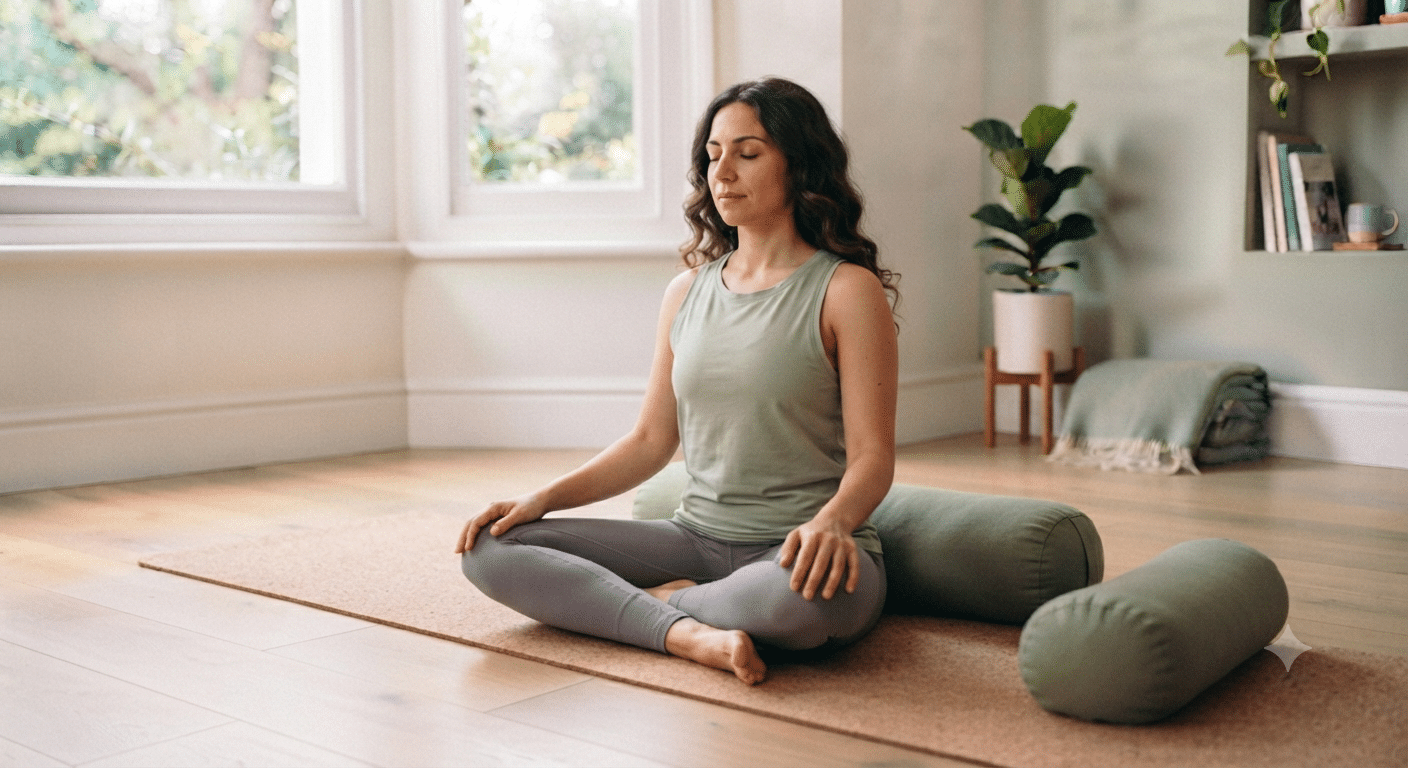
Your body has been holding a conversation with you for years, and you have probably never learned how to listen. That tightness across your shoulders after a stressful call. The way your stomach clenches before you even open your inbox. These are not random glitches — they are your nervous system trying to tell you something.
I hear this from so many women in my community: they have tried stretching, they have tried willpower, and nothing seems to release the tension that lives underneath the surface. That frustration is completely valid, because most movement practices were never designed to speak your nervous system’s language in the first place.
This is exactly where somatic yoga sequences change everything. Unlike a typical yoga class built around how a pose looks, somatic sequences are built around how a pose feels from the inside, guiding your body out of chronic stress patterns one small movement at a time. In this guide, you will learn what makes a sequence truly somatic, how to build your own practice at home, and a full step-by-step sequence you can start using today.
Table of Contents
What Makes Somatic Yoga Sequences Different
A somatic yoga sequence is not simply a slower version of vinyasa. It is built entirely around interoception — your ability to sense what is happening inside your own body, moment to moment.
Traditional yoga often asks you to chase alignment, whereas a somatic sequence asks you to chase sensation instead. You move slowly, you pause often, and you let the nervous system, not the clock, decide when you are ready for the next movement.
I always tell my students that somatic sequences are less like choreography and more like a dialogue. Doesn’t it make sense that a body under chronic stress would need to be gently invited into movement rather than pushed?
The Nervous System Science Behind Somatic Sequencing
Somatic yoga draws heavily from polyvagal theory, the framework developed by neuroscientist Stephen Porges that explains how our autonomic nervous system shifts between states of safety, stress, and shutdown. A well-designed somatic sequence works directly with this biology rather than against it.
Research from Boston University found that consistent yoga practice was associated with increased levels of GABA, a neurotransmitter linked to reduced anxiety and a calmer nervous system. That single finding explains so much about why my students often describe feeling emotionally lighter after a session, even when the movements themselves were incredibly small.
This is not about flexibility. Nervous system regulation is the actual outcome we are training for, and that shifts everything about how a sequence should be designed.
Core Principles Every Somatic Sequence Should Follow
Before you build or follow any sequence, there are a few non-negotiable principles that keep the practice truly somatic rather than just slow yoga wearing a new label.
Movement Should Be Led by Sensation, Not Shape
In a somatic sequence, you never force a position to look a certain way. You move only as far as feels genuinely comfortable, then explore the edges of that sensation with curiosity.
Repetition Matters More Than Variety
Somatic movements are typically repeated slowly, five to eight times, allowing your nervous system to actually register the new movement pattern. A single repetition rarely creates lasting change in muscle memory.
Breath Sets the Pace
Your breath should never be forced into a rigid count. Instead, it acts as a natural timer, letting each inhale and exhale guide how slowly you move through the sequence.
Transitioning from principles into practice is where most people get stuck, so let’s walk through exactly what a full sequence looks like.
A Complete Somatic Yoga Sequence You Can Practice Today
This sequence takes about 20 minutes and requires nothing more than a comfortable surface. I recommend practicing on a cork yoga mat, since the natural texture gives your feet and hands genuine sensory feedback that a slick synthetic surface just cannot offer.
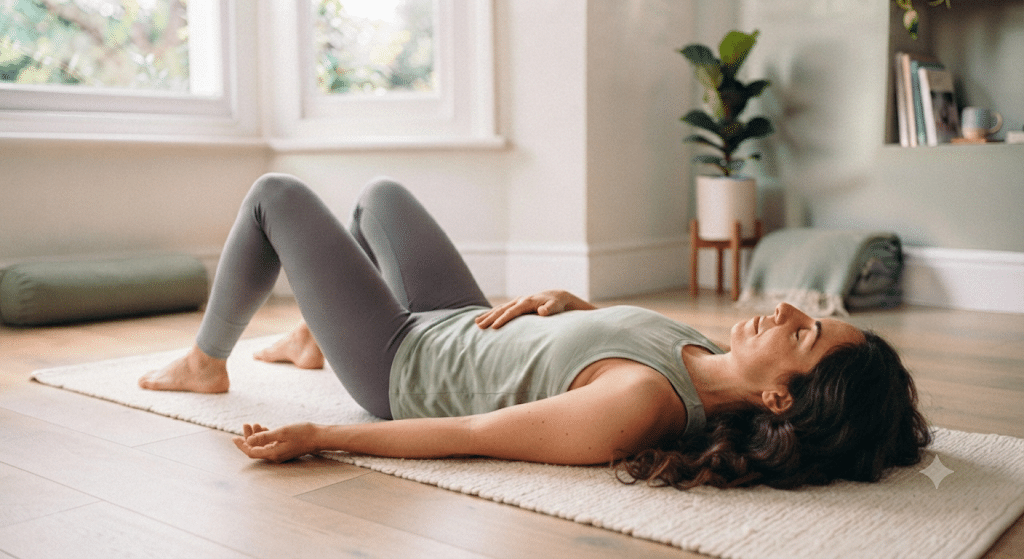
- Constructive Rest Pose — Lie on your back with knees bent and feet flat, letting your spine settle fully into the floor for two full minutes.
- Pelvic Tilts — Slowly rock your pelvis forward and back eight times, noticing where your lower back naturally wants to move.
- Arm Sweeps with Breath — Inhale as you sweep both arms overhead, exhale as you lower them, repeating six slow rounds.
- Knee Drops — Let both knees fall gently to one side, pause, then return to center and repeat on the other side, three times each way.
- Seated Spinal Waves — Sitting cross-legged, slowly wave your spine forward and back like a gentle ocean swell, five repetitions.
- Somatic Twist — From seated, rotate your torso slowly toward one side, holding only as long as it feels easeful, then switch.
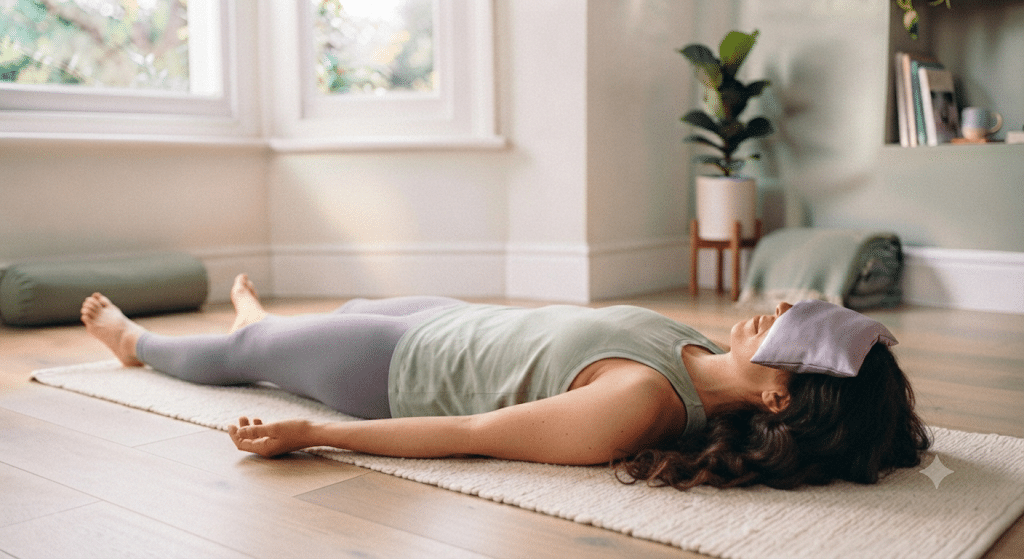
- Final Stillness — Lie back down and simply notice how your body feels different from when you began, resting here for three minutes.
💚 Sofia’s Tip: If any step feels rushed, you are moving too fast. Somatic work rewards patience far more than repetition count ever will.
Building Your Own Custom Sequence at Home
Once you understand the core principles, you can absolutely design sequences tailored to your own body’s needs rather than following a script forever.
Start by noticing where you carry the most tension — shoulders, hips, and jaw are extremely common areas — and choose two or three somatic movements that specifically target that region. A yoga bolster placed beneath your knees during floor work can make an enormous difference here, allowing your lower back to soften completely without any active effort on your part.
I remember building my very first custom sequence years ago, entirely around my chronically tight hips from years of desk work. Within three weeks of practicing that simple, repetitive sequence, I noticed I could finally sit cross-legged on the floor without any pinching sensation at all.
Common Mistakes That Undermine a Somatic Practice
Even well-intentioned practitioners sometimes fall back into old habits that quietly cancel out the benefits of somatic work.
Moving Too Quickly Between Steps
Rushing through a sequence reactivates the same sympathetic stress response that somatic yoga is designed to calm down. Give yourself permission to move at half the speed you think you need.
Judging the Movement Instead of Feeling It
If you catch yourself thinking “am I doing this right,” you have shifted from sensation into evaluation, which is the opposite of what somatic practice asks of you.
Recognizing these patterns early makes an enormous difference in how quickly your nervous system begins to trust the practice.
Using Somatic Sequences for Sleep and Deep Relaxation
Evening somatic sequences are particularly powerful because they help downshift your nervous system before bed, something regular stretching rarely accomplishes on its own.
For an evening practice, I love guiding students through a slow body scan while using an eye pillow to add gentle, calming pressure across the eyes. That small weight genuinely signals safety to your nervous system in a way that few other tools can replicate so simply.
Pairing this with the Final Stillness step from your sequence, extended to five or six minutes, creates a wind-down ritual your body will begin to anticipate and crave.
How Often You Should Practice Somatic Yoga Sequences
Consistency matters far more than duration when it comes to somatic work. A daily ten-minute sequence will change your nervous system far more effectively than one long ninety-minute session once a week.
I encourage my students to think of somatic practice the same way they think of brushing their teeth — not something reserved for when things feel dramatic, but a small daily deposit into your nervous system’s overall resilience. Doesn’t that reframe feel a lot more sustainable than an all-or-nothing approach?
Key Takeaways
→ Somatic sequences prioritize sensation over shape, unlike traditional yoga poses
→ Slow repetition rewires movement patterns more effectively than variety
→ Breath naturally paces every somatic movement, never the other way around
→ Daily short practice outperforms infrequent long sessions for nervous system change
→ Evening sequences paired with gentle props support deeper, more restful sleep
Conclusion
Somatic yoga sequences work because they finally speak your nervous system’s actual language instead of asking your body to perform. You do not need to execute every step perfectly, and you do not need an hour of free time — you simply need consistency and a willingness to move gently, again and again.
Start with even one section of the sequence above tonight, and notice how your body responds over the coming week. I would love to hear how it feels for you, so come share your experience in the comments over on SomaticYogaFlow.com.
Frequently Asked Questions
What is the difference between somatic yoga and regular yoga?
Somatic yoga focuses on internal sensation and nervous system regulation rather than external alignment or flexibility goals. Regular yoga often emphasizes holding poses correctly, while somatic yoga emphasizes moving slowly enough to actually feel what is happening inside your body. Both practices have value, but somatic yoga is specifically designed for stress, trauma, and chronic tension recovery.
How long should a somatic yoga sequence be?
A somatic sequence can be as short as ten minutes or as long as forty-five, depending on your schedule and needs. What matters far more than length is consistency, since a short daily practice tends to create more lasting nervous system change than an occasional long one. Beginners often do best starting with fifteen to twenty minutes.
Can somatic yoga help with anxiety?
Yes, somatic yoga is specifically designed to support nervous system regulation, which directly influences anxiety symptoms over time. By slowly guiding the body out of chronic stress patterns, somatic sequences can help reduce the physical tension that often accompanies anxious thoughts. Many practitioners notice a calmer baseline within a few consistent weeks of practice.
Do I need any equipment for somatic yoga sequences?
No, somatic yoga sequences can be practiced with just your body and a comfortable surface to lie or sit on. Props like a bolster, mat, or eye pillow can enhance comfort and support deeper relaxation, but they are never strictly required. Many of my own early sequences were practiced on nothing more than a folded blanket.
What is the best time of day to practice somatic yoga?
Somatic yoga can be practiced any time, though many people find mornings helpful for gently waking the nervous system and evenings helpful for winding it down before sleep. The right time ultimately depends on what your body and schedule need most. Some of my students even practice brief somatic sequences during a midday work break to reset their stress levels.